

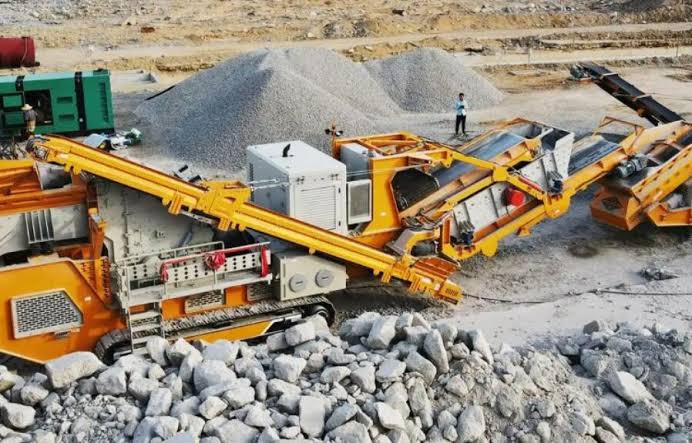

1. What Is Construction Waste Crushing Equipment?
Construction and demolition projects generate large amounts of concrete, bricks, asphalt and stones. Sending these materials to landfills wastes valuable resources and occupies land.
Crushing equipment processes suitable waste into recycled aggregates for road bases, backfilling and other approved construction applications.
A concrete crusher uses compression or impact forces to reduce concrete into smaller particles. Screening and magnetic separation systems then separate different aggregate sizes and remove reinforcing steel.
According to the U.S. Environmental Protection Agency (EPA), the United States generated approximately 600.3 million tons of construction and demolition debris in 2018. Around 313.1 million tons entered aggregate reuse channels.[U.S. EPA]
2. Common Types of Crushing Equipment
2.1 Jaw Crusher
A jaw crusher uses two jaw plates to compress and break large concrete blocks and bricks.
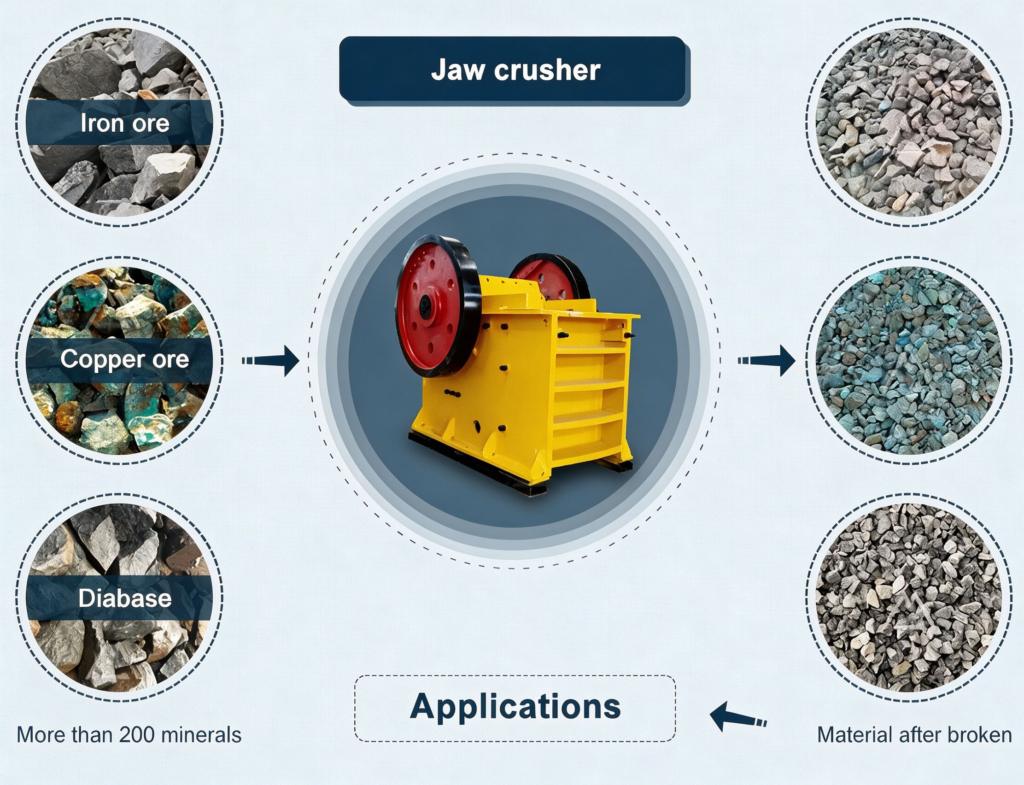
Key advantages:
- Large feed opening.
- Simple structure.
- Convenient maintenance.
- Suitable for primary crushing.
2.2 Impact Crusher
An impact crusher uses a high-speed rotor to break concrete, bricks and selected asphalt waste.
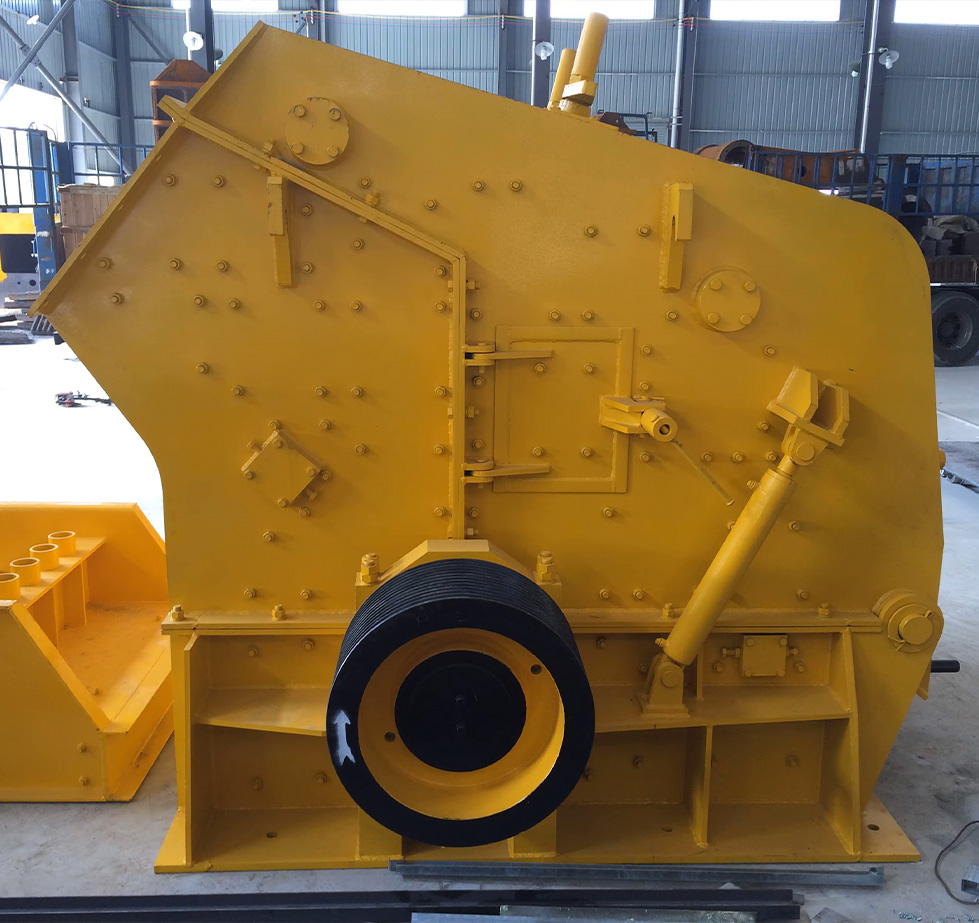
It produces well-shaped aggregates but requires regular inspection of hammers and impact liners.
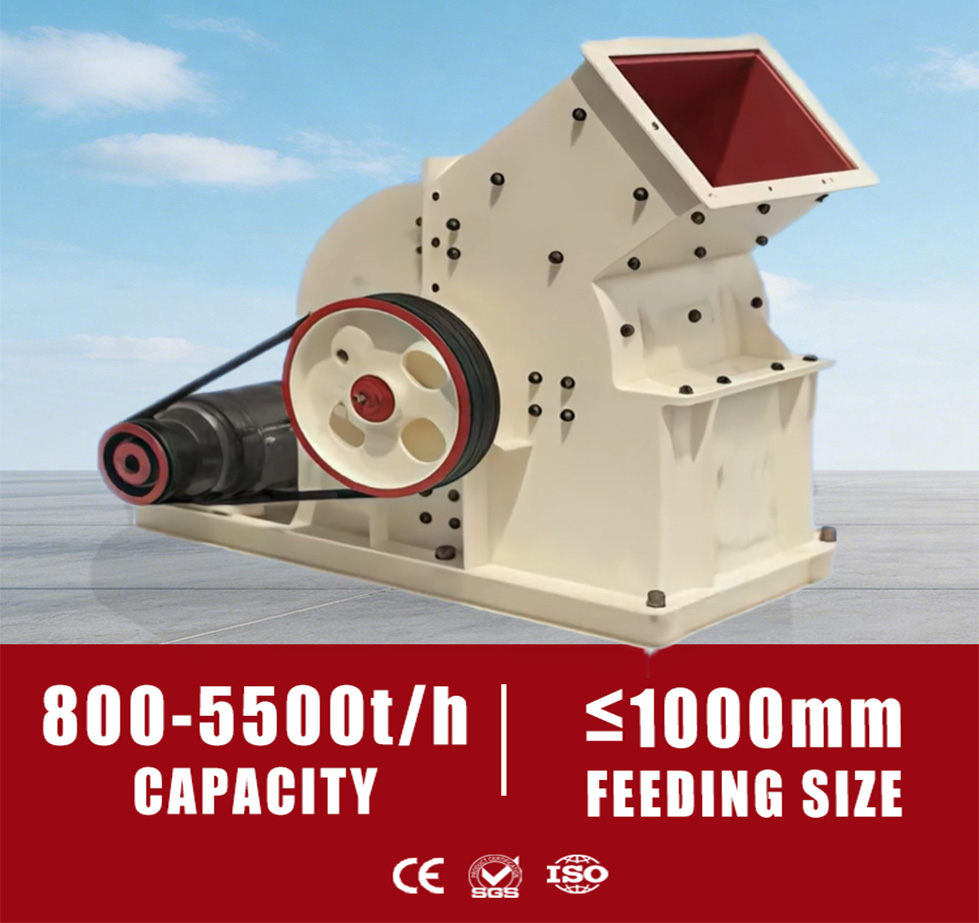
2.3 Hammer Crusher
A hammer crusher uses rotating hammers to break bricks, limestone and selected construction waste. Operators should remove metal materials before processing reinforced concrete.
2.4 Mobile Crushing Plant
Mobile equipment integrates crushing, screening and conveying systems on a movable chassis.
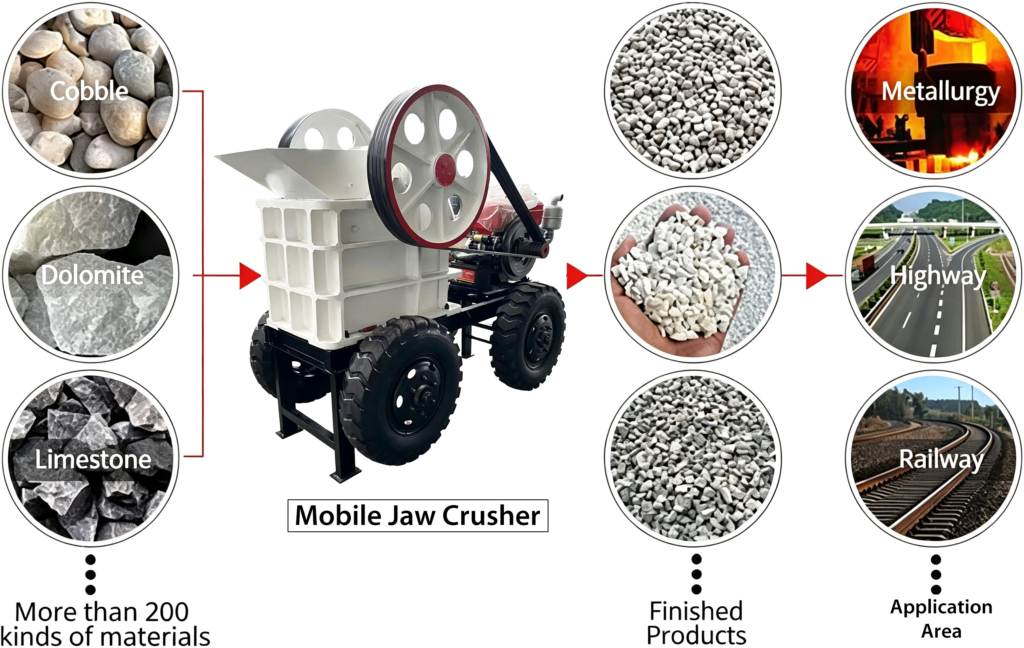
It reduces transportation requirements and allows operators to process waste directly at demolition sites.
3. How Does a Recycling Plant Work?
A typical construction waste recycling process includes:
- Pre-sorting: Remove plastic, wood and glass.
- Primary crushing: Process large concrete blocks with a jaw crusher.
- Metal separation: Remove reinforcing steel with magnetic separators.
- Secondary crushing: Further reduce material size.
- Screening: Separate aggregates into different sizes.
- Storage: Prepare finished products for reuse.
The EPA explains that processed concrete can replace some natural aggregate in road construction after suitable crushing and metal separation.[U.S. EPA]
4. How to Choose the Right Equipment
Before purchasing equipment, consider:
- Material type: Concrete, bricks and asphalt require different processing solutions.
- Steel content: Reinforced concrete needs suitable metal separation.
- Feed size: Check the maximum feed opening.
- Output size: Match screening specifications to the intended application.
- Capacity: Calculate hourly processing requirements.
- Location: Stationary plants suit centralized facilities, while mobile plants offer flexibility.
Dust control is also important. NIOSH recommends ventilation, dust-source control and filtration to reduce exposure to respirable crystalline silica.[CDC / NIOSH]
5. Why Consider Minjie Machinery?
Minjie Machinery (Fujian Minjie Machinery Co., Ltd.) is a machinery manufacturer based in Fujian, China. Its official website states that the company was established in 1988.
Its product catalogue includes:
- PE Jaw Crusher: For primary crushing.
- Efficient Crusher: Mineral processing crushing equipment.
- Vertical Crusher: Vertical crushing equipment.
- Conical Crusher: Cone-type crushing equipment.
Minjie’s published product information lists construction and stone processing applications for its jaw crusher, while its vertical crusher is designed for selected materials such as cement clinker, gypsum and limestone.
For construction waste projects, buyers should consult Minjie about material compatibility, particularly when processing reinforced concrete.
Before ordering, confirm feed size, hourly capacity, motor power, output size, wear parts and after-sales service.
6. Maintenance and Conclusion
Regular maintenance helps reduce downtime. Operators should inspect jaw plates, hammers, bearings and transmission systems, lubricate components according to instructions and prevent metal objects from entering the crushing chamber.
Always disconnect power and isolate hazardous energy before maintenance.
Construction waste recycling reduces landfill disposal and turns suitable concrete waste into reusable aggregates. For businesses seeking crushing equipment, Minjie Machinery offers jaw, vertical and other crushing products worth evaluating.
Proper equipment selection and maintenance can improve recycling efficiency and production stability.
Contact us now for more information and product quotations.