
At a house demolition site in Handan, Hebei, a construction waste crusher went to work on the spot, grinding bricks and concrete blocks into material that could be backfilled directly. The site manager did the math: transport and disposal fees saved, new fill material no longer purchased, several thousand yuan kept in the project budget. Scenes like this are appearing in more and more places, and the equipment at the center of them is what this article focuses on: the mini crusher.
1. The question small crushers answer is not “can it crush” but “where and for whom”
A large crushing line works well for mines and aggregate plants, but it carries an implicit precondition: material must be brought to the machine. When material is scattered, generation points shift, and individual batches are modest, hauling costs and site requirements eat into the margin. The value of small crushing equipment lies in reversing the flow—bringing the crusher to the waste rather than hauling the waste to the crusher.
Market figures support this shift. China’s micro crusher market reached roughly 4.87 billion yuan in 2025, up 9.6% year on year, with construction waste recycling as a major driver. The broader backdrop is that annual construction waste generation has surpassed 3.5 billion tonnes, while the resource recovery rate stands at only 38.2%. On-site crushing and in-place reuse is one of the most direct engineering routes to raising that figure(hyccpc360).
2. Stationary small crushers: making “small and steady” work
A stationary small crusher does not chase mobility. Its advantage concentrates in compact structure, straightforward maintenance, and stable output. Jaw and roll designs cover coarse and medium-fine duties respectively.
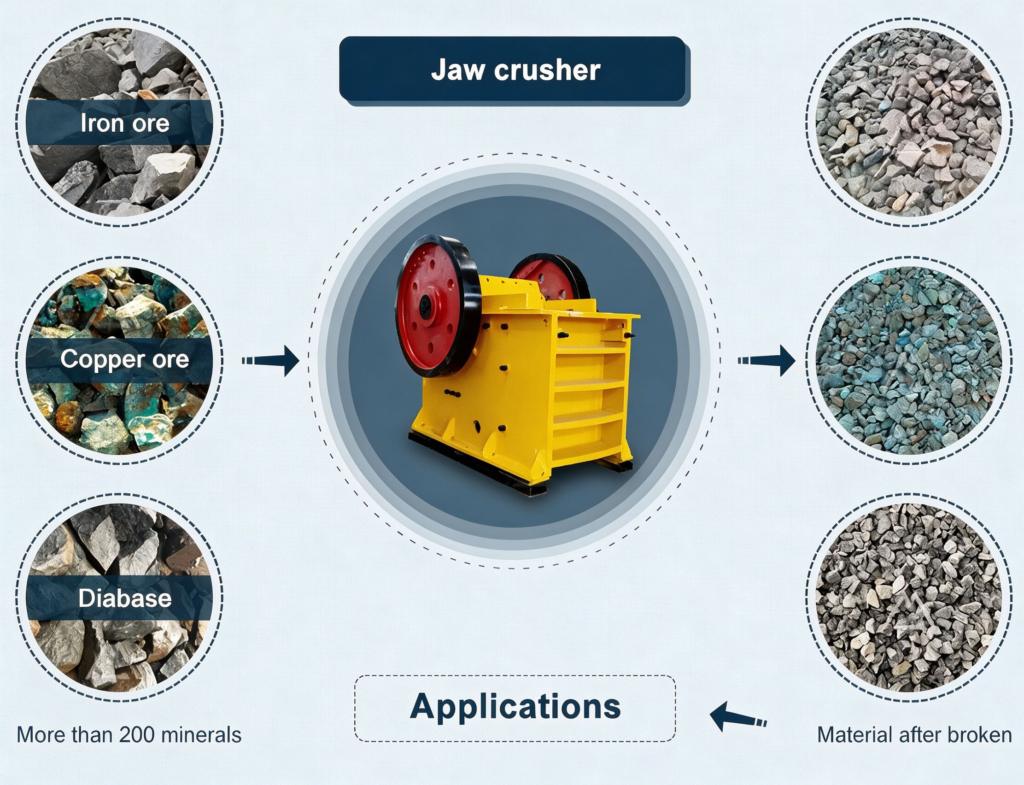
Minjie machinery offers representative products in both directions. Its PE jaw crusher line includes the PE-150X250, with a maximum feed size of 125 mm, throughput of 1–5 t/h, 5.5 kW motor, and an overall weight of just 0.8 t at 875×758×850 mm. The significance of this scale is practical: a reinforced industrial floor or a modest workshop can house it, making it suitable for small-batch ore and building-material primary crushing, as well as the front end of a pilot or laboratory line.
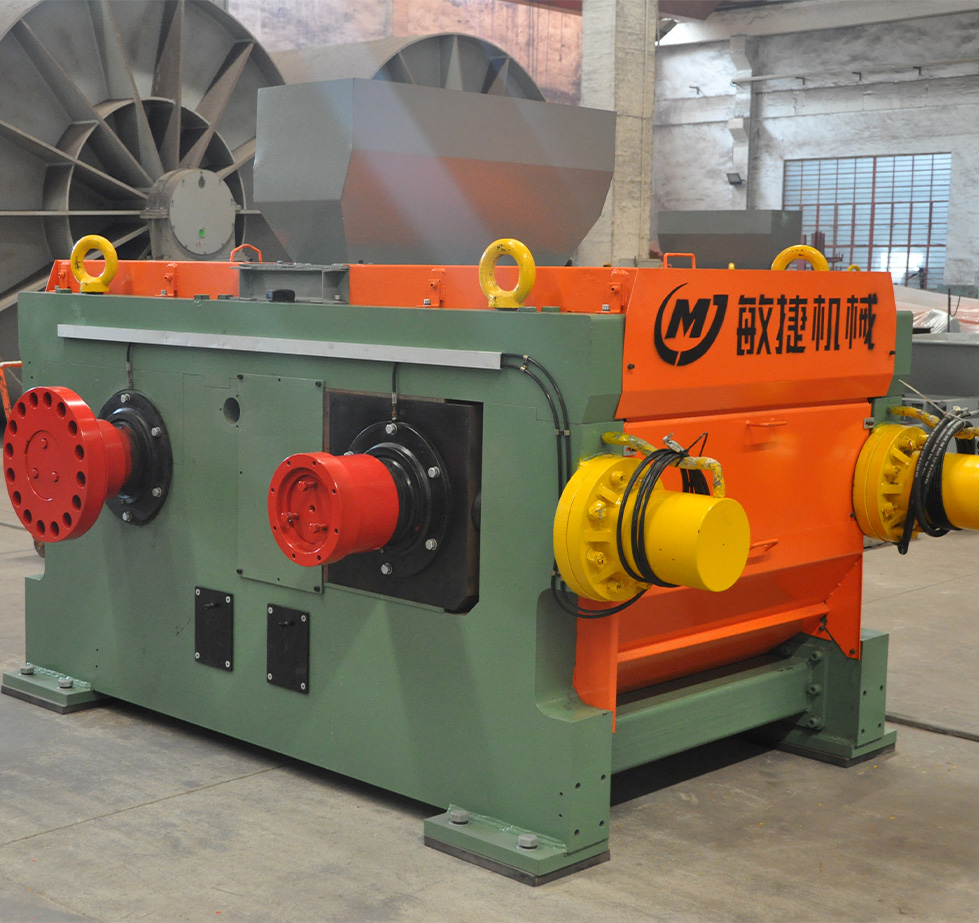
The roll crusher targets finer discharge. Minjie’s 1000×580 and 1200×800 models accept feed up to 20 mm and discharge down to 3 mm, with outputs of 40–50 t/h and 50–70 t/h and motor ratings of 75 kW and 132 kW respectively. Roll rings are made of high-chromium molybdenum-vanadium alloy reaching hardness above HRC60°, and a scraper device reduces material sticking. More importantly, the online repair system allows worn roll rings to be restored on the machine without removing bearings, cutting downtime. In fine crushing for mineral processing or building materials, that maintenance philosophy often matters more than peak throughput on paper.
3. Small mobile crushers: making “showing up” the core capability
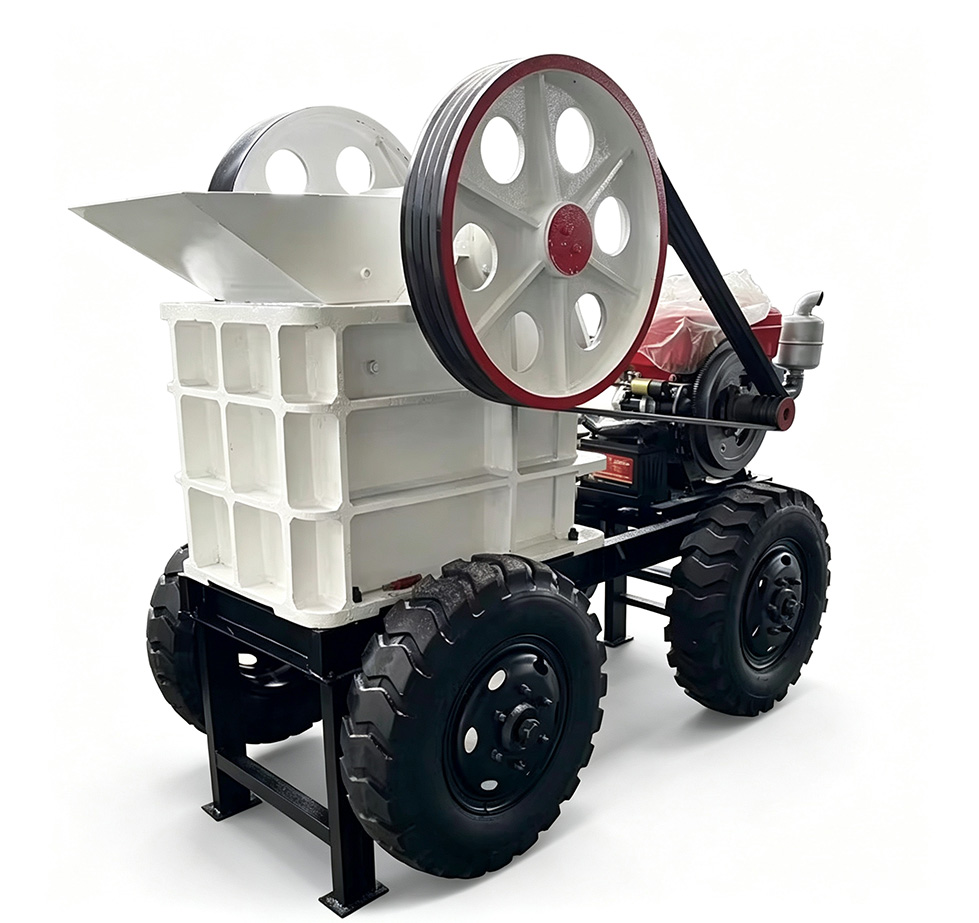
Mobility is where small crushing equipment genuinely changes the operating logic. Wheel-mounted units suit road towing between sites; tracked units move themselves across difficult ground. Both pursue the same goal: the crusher follows the material, not the other way around.
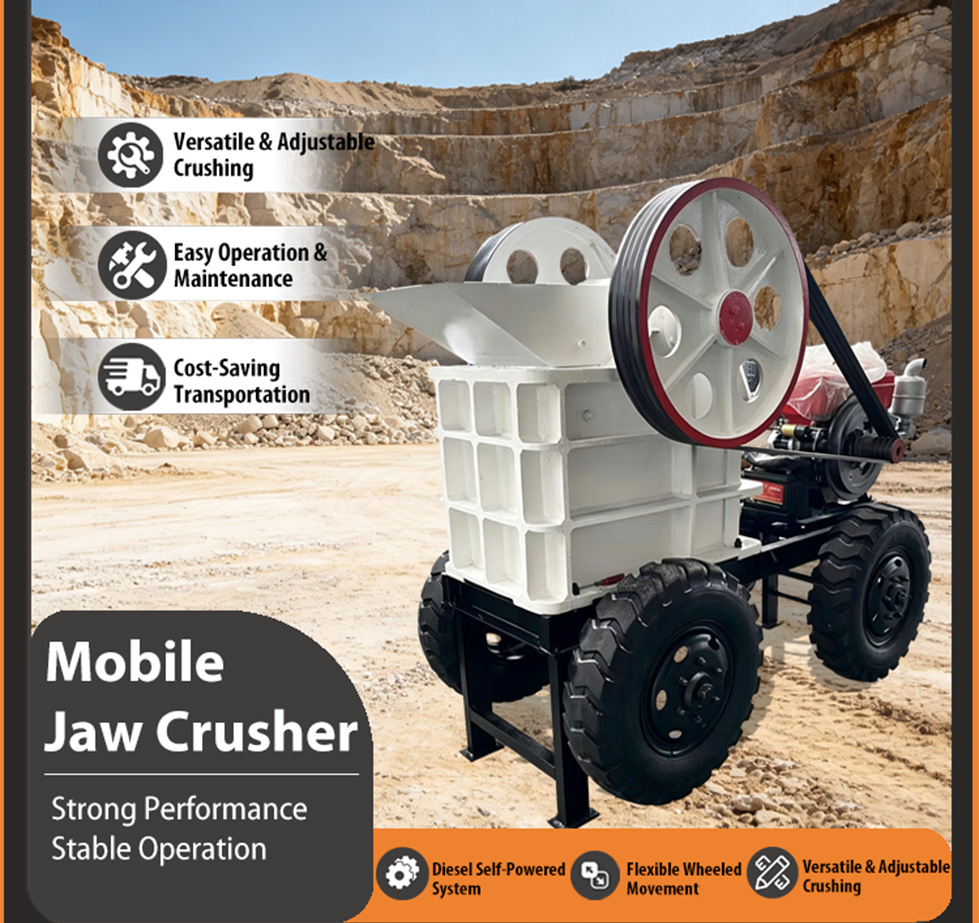
The economics also have numbers behind them. Dual-power systems cut overall energy consumption by 34% through optimized diesel-to-electric switching, helping projects clear clean-operation reviews for non-road mobile machinery. Payback periods for leading customers cluster at 22–28 months, with construction-waste disposal fees and recycled aggregate sales combining to lift returns. A mini crusher on wheels or tracks is not a compromise purchase; it carries a standalone economic model.
Minjie machinery’s approach to mobility follows the same logic as its stationary line: take proven crushing geometry, compress the footprint, and preserve core crushing performance. The PE jaw series already includes small-tonnage models suitable for mounting on a mobile chassis, and the roll crusher’s compact structure provides a basis for mobile adaptation. For users who move between scattered points without justifying a large fixed plant at any one of them, this “proven model plus mobile platform” path is more controllable than developing a dedicated mobile machine from scratch.
4. How to choose: material first, then relocation frequency
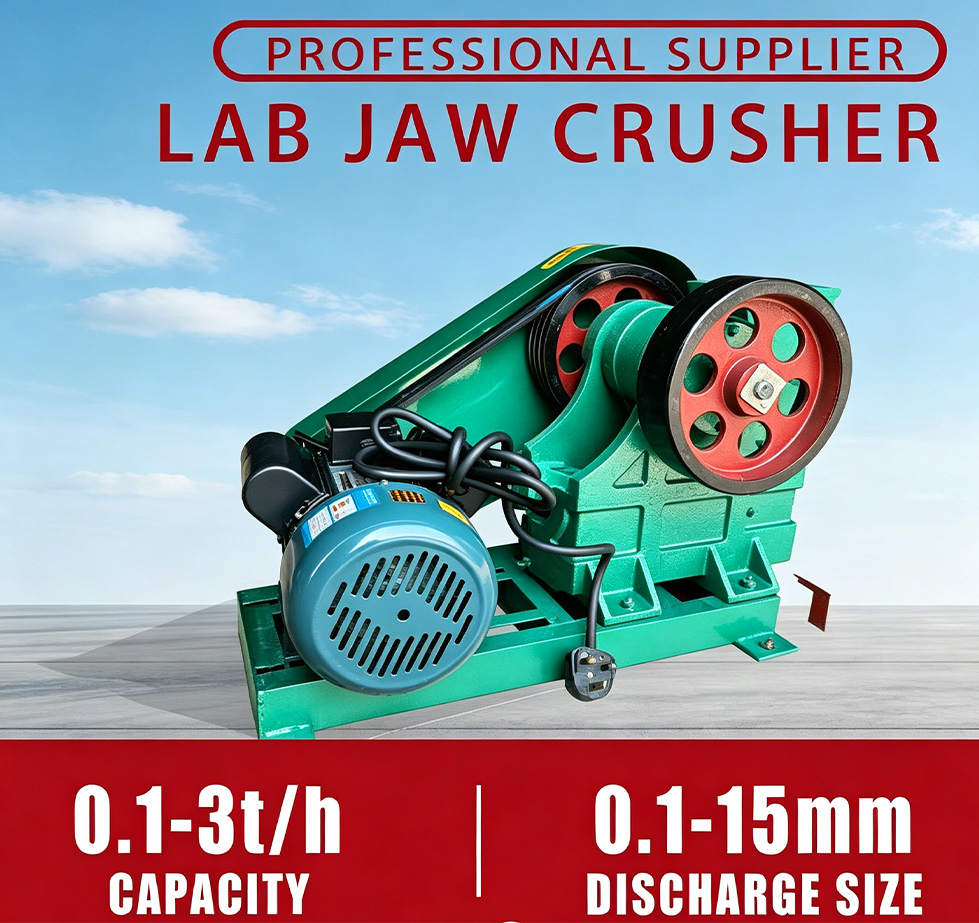
Material is the first variable. Concrete blocks, bricks, and mortar-dominated construction waste most often call for a jaw crusher as the primary unit. Where discharge fineness and particle uniformity matter in mineral or raw-material processing, the roll crusher has the edge. Laboratory and small-batch fine work should prioritize kilogram-level capacity, cleanliness, and repeatability. The second variable is relocation frequency. For long-term work at one site, stationary equipment usually wins on maintenance access and unit-capacity cost; where material points are scattered and individual jobs are short, mobility converts directly into savings.
Minjie machinery’s product layout addresses both dimensions: stationary jaw and roll crushers for stable sites with concentrated material, and mobile-compatible configurations for work that follows the material. A manufacturing background dating to 1988, more than three decades of processing-equipment experience, and a production base of nearly 200,000 square meters in Quanzhou, Fujian, with over 300 employees, provide the underlying delivery capacity from single machines to integrated solutions.
The direction of small crushing equipment is clear: put crushing capacity closer to where material arises, let maintenance interrupt production less, and make energy and relocation costs more predictable. When a mini crusher turns demolition debris into backfill aggregate on the spot, it stops being merely a smaller version of a big machine and becomes a tool for rearranging how material flows. Minjie machinery’s portfolio under that logic—from kilogram-scale laboratory jaw crushers to tonne-scale industrial jaw and roll crushers, and compact configurations built for mobile deployment—offers a reference frame worth including in any selection process.
Contact us now for more information and product quotations.