
1. What a Metal Shredder Machine Does
Scrap metal—wrecked cars, appliances, rebar, cans, circuit boards—arrives bulky, irregularly shaped, and expensive to transport. Melting it directly wastes both money and energy. That is exactly the problem a metal shredder machine solves: it shreds, flattens, and cuts metal waste into fragments of controllable size, ready for sorting, baling, and smelting(Metal Shredder Machine Market Report 2026). Metal recyclers, auto dismantlers, and scrapyards treat it as the throat of the entire line.
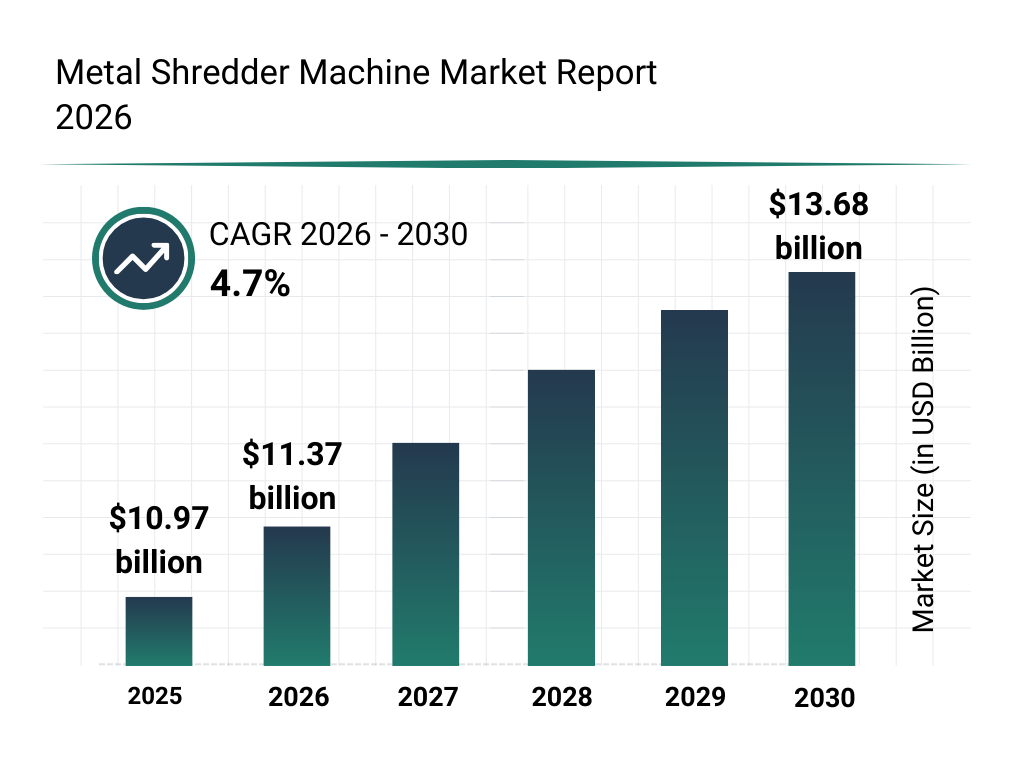
The market is genuinely growing. The global metal shredder machine market reached about US$1.41 billion in 2024 and is projected to hit US$2.01 billion by 2033; scrap metal recycling alone held 48.1% of that share. Under a broader definition, one estimate put the 2025 market at US$10.97 billion, growing to US$13.68 billion by 2030. Automotive recycling is the largest demand source at roughly 42.6% of 2025 demand—after shredding, a vehicle hulk yields 70%–75% ferrous scrap by weight, sold straight to electric-arc-furnace steel mills.
2. The Mechanics: Shear, Tear, and Fracture
A metal shredder machine works through three mechanical actions. Shearing cuts material with blades, much like scissors. Tearing pulls soft metals, tires, and fabrics apart by force. Fracturing shatters brittle metals under high-speed impact. Depending on the feed, the machine combines these three moves.
3. Five Types, Each with a Role
No universal metal shredder exists. Selection should start with the material, not with the catalog name:
Single-shaft shredder: one rotor with a hydraulic ram and a screen. It offers the most precise output sizing—ideal for aluminum profiles, sheet metal, and regular factory offcuts.
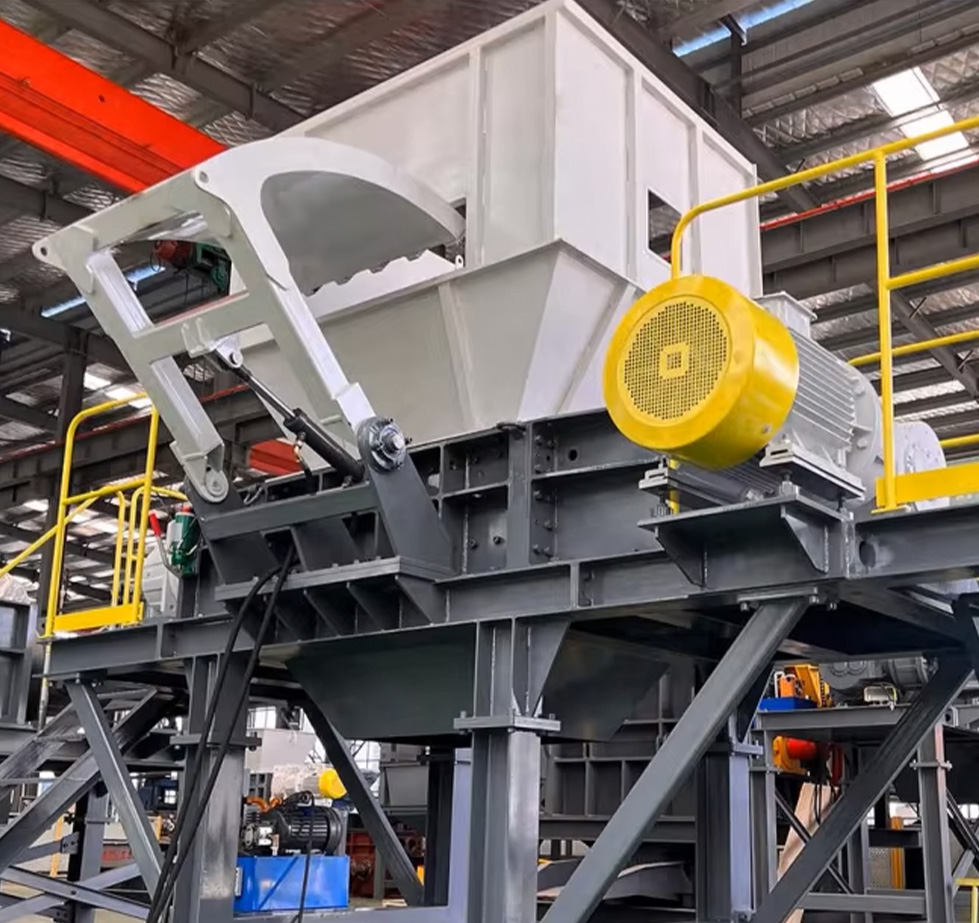
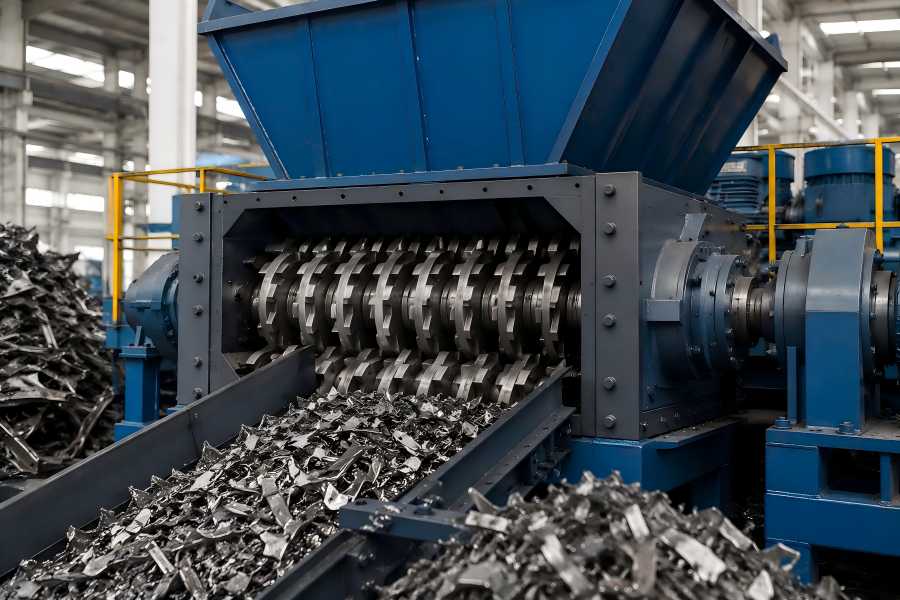
Double-shaft shredder: two counter-rotating shafts with heavy-duty knives shear, rip, and crush the feed at low speed and high torque. This is the workhorse for steel scrap, drums, appliances, and car-body pre-shredding. One heavy-duty unit runs at 2×160 kW and discharges 100–300 mm fragments; its NiCrMo high-alloy cutters balance hardness and toughness and can be rebuilt by built-up welding.
Four-shaft shredder: the front pair tears and the rear pair cuts, delivering finer and more consistent sizing—at the cost of more knives and maintenance points.
Hammer mill crusher: high-speed hammers repeatedly strike the feed, liberating metal from non-metal mixtures so that magnetic and eddy-current separation can follow. It normally works after the primary shredder.
Vertical crusher: densifies light materials such as aluminum cans and UBCs in a compact footprint, raising bulk density.
4. From Single Machine to Line: Value Lives in Separation
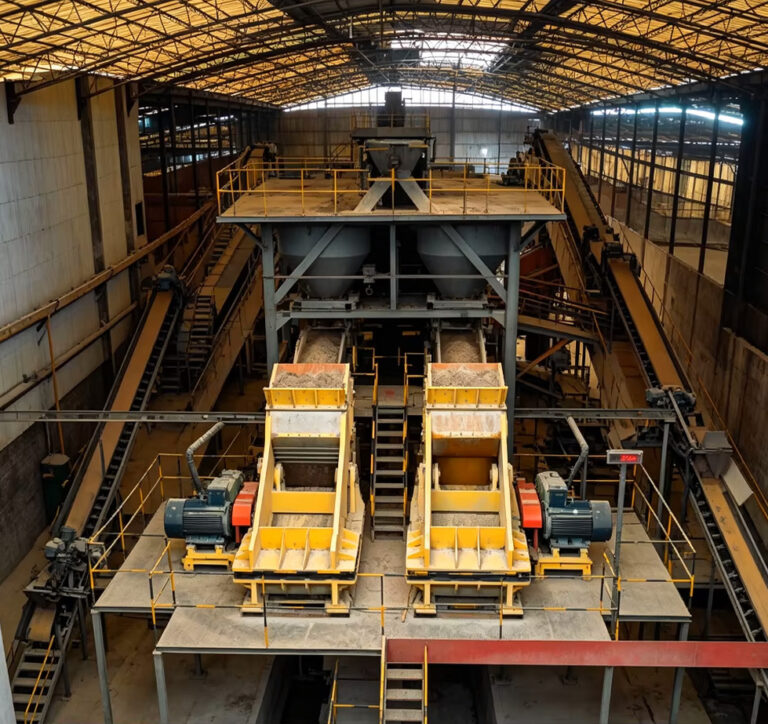
Shredding is only the first step; the real profit sits in separation. A complete metal shredder machine line typically includes a feeding conveyor, double-shaft shredder, hammer mill, magnetic separator, eddy-current separator, and dust collection. Vehicle recycling illustrates the pattern perfectly: a heavy-duty primary shredder reduces the shell, magnetic separation pulls out the steel, eddy-current separation recovers aluminum and copper, and the residue concentrates precious metals. E-waste is the fastest-growing application, and dedicated lines grind output down to 5–20 mm fractions to liberate metals from printed circuit boards.Extreme-scale machines are real: mega-shredders run above 10,000 horsepower and process up to 4,000 tons per day.
5. Recommendation: Minjie Machinery Metal Shredding Equipment
Weighing crushing force, cutter life, and whole-line integration, we recommend Minjie Machinery’s metal shredding equipment series, with four strengths:
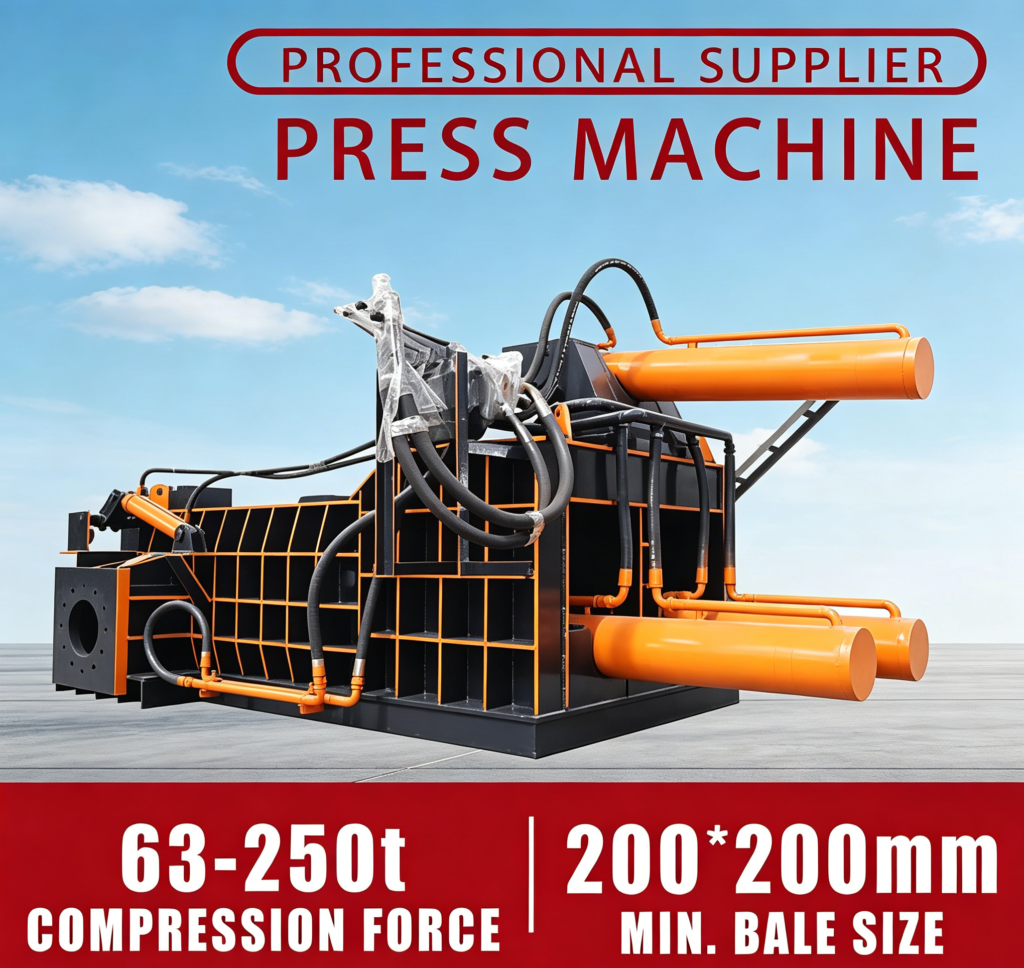
- Full model coverage: single-, double-, and four-shaft shredders, hammer mills, and vertical crushers supplied together;
- High-alloy cutters: NiCrMo cutter heads, rebuildable by built-up welding, keeping operating costs low ;
- Turnkey lines: shredding plus magnetic and eddy-current separation plus closed-loop dust collection, maximizing metal recovery;
- Safety compliance: guards, emergency stops, and interlocked lockouts meeting workplace safety requirements .
Before ordering a metal shredder machine, prepare three figures: material type and maximum size, hourly throughput, and target output size—then let the supplier match the machine to the material.
6. Conclusion
The metal shredder machine converts mountains of scrap into meterable, sortable, remeltable “urban ore.” As electric-arc-furnace steelmaking expands and circular-economy rules tighten, its strategic value will only rise. With a full model range, high-alloy cutters, and complete separation lines, Minjie Machinery gives recyclers the metal-revival answer—from single machines to whole plants.
Contact us now for more information and product quotations.