
1. What a Mixing Tank Does
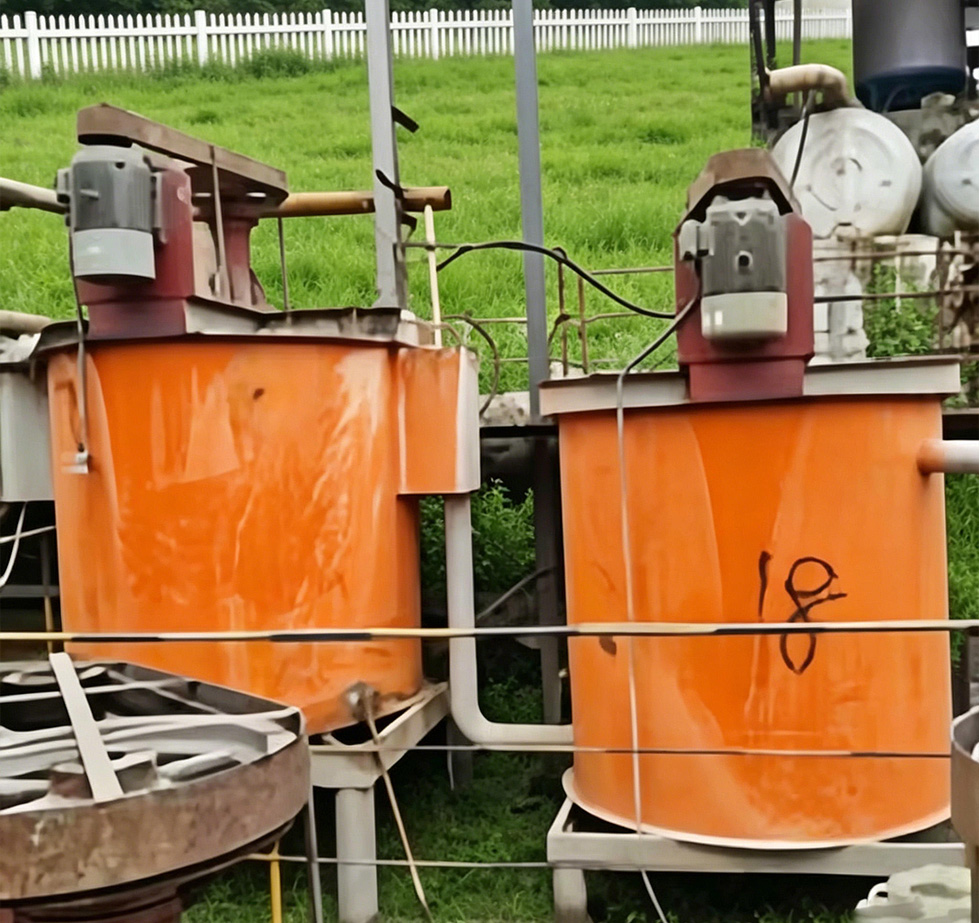
Blending two or more ingredients into a uniform mixture is a daily task across chemicals, food, pharmaceuticals, water treatment, and mining. The mixing tank is the standard machine for it: a vessel fitted with a motor-driven agitator whose rotating impeller creates fluid motion, blending liquids, powders, or semi-solids—dissolving, dispersing, or emulsifying them. From shampoo to chili sauce, from medicine to mineral slurry, the mixing tank is everywhere—a true universal pot.
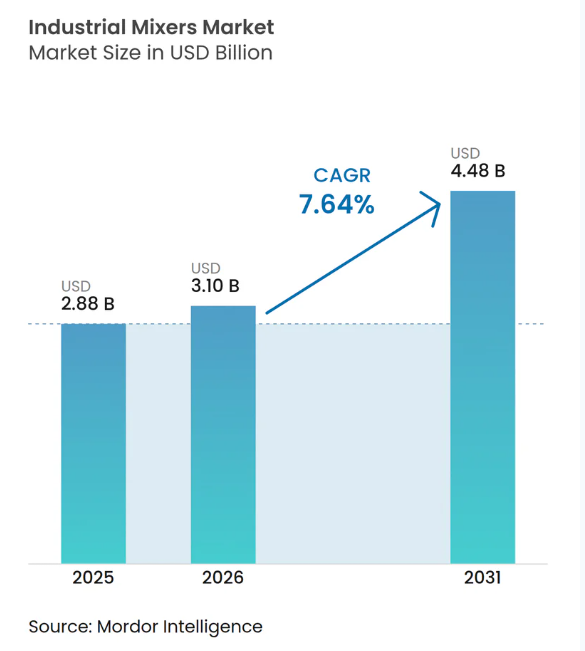
Market data backs this up. The global mixing tank market reached about US$3.71 billion in 2025 and should hit US$5.48 billion by 2032, a 5.7% CAGR; the broader industrial mixer market stood at US$2.88 billion in 2025, heading to US$4.48 billion by 2031, with agitators holding a 35.85% revenue share(The Industrial Mixers Market Report). Asia-Pacific is the fastest-growing region, driven by chemical, pharmaceutical, and water-treatment investment.
2. Working Principle: Mechanical Energy Becomes Fluid Motion
A mixing tank works through a clear cycle: the motor starts and delivers rotation through a gearbox to the shaft; the impeller builds axial and radial flow fields that drive bulk circulation; the high-speed zone generates shear that breaks agglomerates; if a jacket is fitted, heat enters or leaves in sync; and the batch finally homogenizes.
Before choosing an impeller, think about three flow patterns. Axial flow pushes material up and down along the shaft—most efficient for solids suspension and heat transfer, and the most common choice. Radial flow throws material against the wall with more shear, suiting dispersion. Tangential flow merely spins the mass in a circle, fitting medium and high viscosities.
3. Pick the Impeller by Viscosity: One Table Says It All
The core of mixing tank selection is not power—it is matching the impeller to viscosity. The industry table is remarkably practical:
| Impeller type | Suitable viscosity | Typical use |
|---|
Low-viscosity fluids run happily on high-speed propellers—a directly driven unit reaches up to 1,500 rpm and delivers high circulation at low energy input. Tank geometry matters too: keep the height-to-diameter ratio between 1:1 and 3:1—slender tanks favor vertical circulation, wide tanks accommodate larger impellers and more volume.
4. Killing the Vortex and Sizing the Motor
At high speed, the liquid surface forms a vortex, and in the worst case it draws air into the product and ruins the mix. Engineers use two fixes: weld baffles on the wall to break the bulk rotation, or mount the agitator off-center or at an angle. Motors typically range from 0.5 to 200 kW with VFDs for precise speed control, and tanks are usually built from SUS304/316L stainless steel for corrosion resistance and cleanability. Notably, IE5 motors with VFD-integrated drives cut mixer power consumption by up to 20%.
5. Applications: From Pharma to Mining
The mixing tank appears across every sector: food plants blend juices, sauces, and dairy under sanitary clean-in-place regimes; cosmetics makers emulsify creams and gels, often under vacuum; pharmaceutical plants dissolve actives and control reaction heat under strict validation; chemical plants dissolve reagents, hold suspensions, and manage reaction exotherms; mineral concentrators use slurry mixing tanks to blend reagents with pulp before flotation, at slurry concentrations up to 75%.
6. Recommendation: Minjie Machinery Mixing Tank Equipment
Weighing flow matching, material compliance, and line integration, we recommend Minjie Machinery’s mixing tank equipment series, with four strengths:
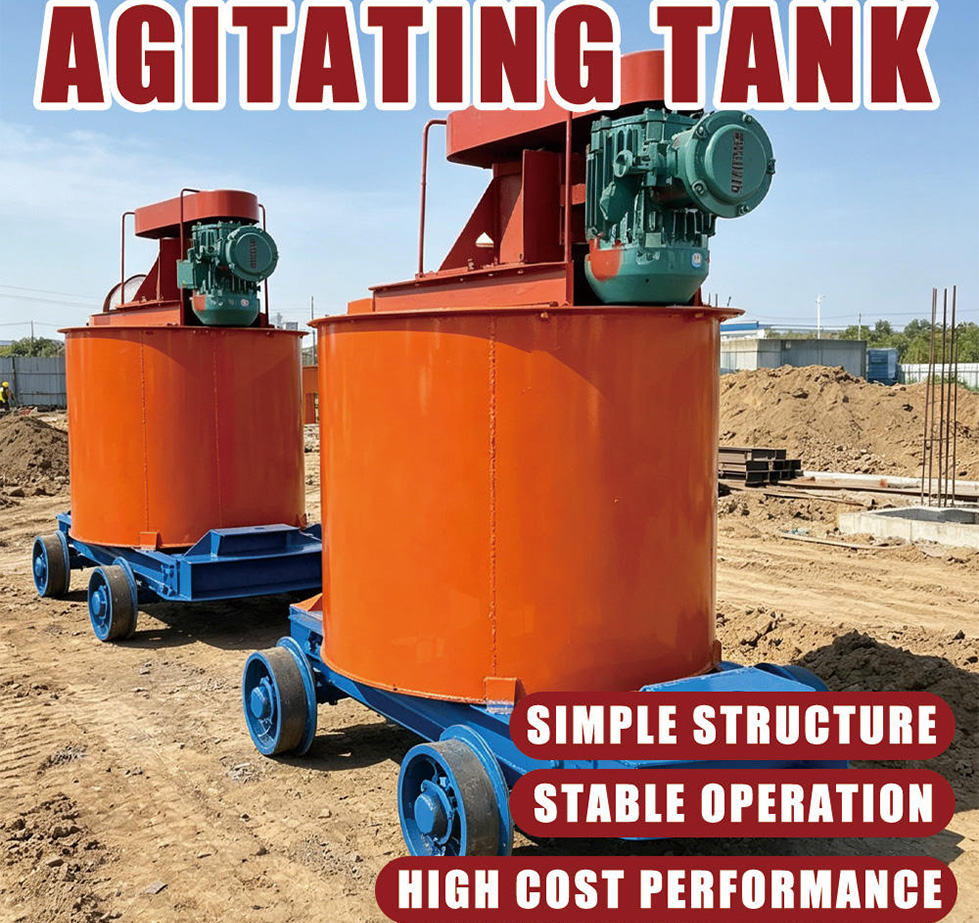
- Full size range: from 100 L laboratory units to 10,000 L industrial tanks, vertical and horizontal, jacketed for heating or cooling ;
- Any impeller configuration: propeller, turbine, anchor, frame, and scraper types, including combined “anchor plus high-speed disperser” setups;
- Sanitary design: SUS304/316L bodies with mirror-polished finishes and CIP ports, directly compliant for food and pharma duty;
- Smart control: PLC recipe management, VFD speed control, and temperature/level interlocks that noticeably lift batch repeatability .
Before ordering a mixing tank, prepare three figures: material viscosity and density, batch volume, and the mixing goal (homogenization, suspension, or emulsification)—then let the supplier match tank type, impeller, and speed.
7. Conclusion
The mixing tank is simple in principle, yet it decides the uniformity and stability of thousands of products. Match the impeller and the vortex disappears; tune the speed and energy drops. With its full-size vessels, complete impeller range, and smart control options, Minjie Machinery gives chemical, food, pharmaceutical, and mining producers the blending answer—from single machines to whole lines.
Contact us now for more information and product quotations.