
1. Grinding Balls: The Hardest Workers in the Mill
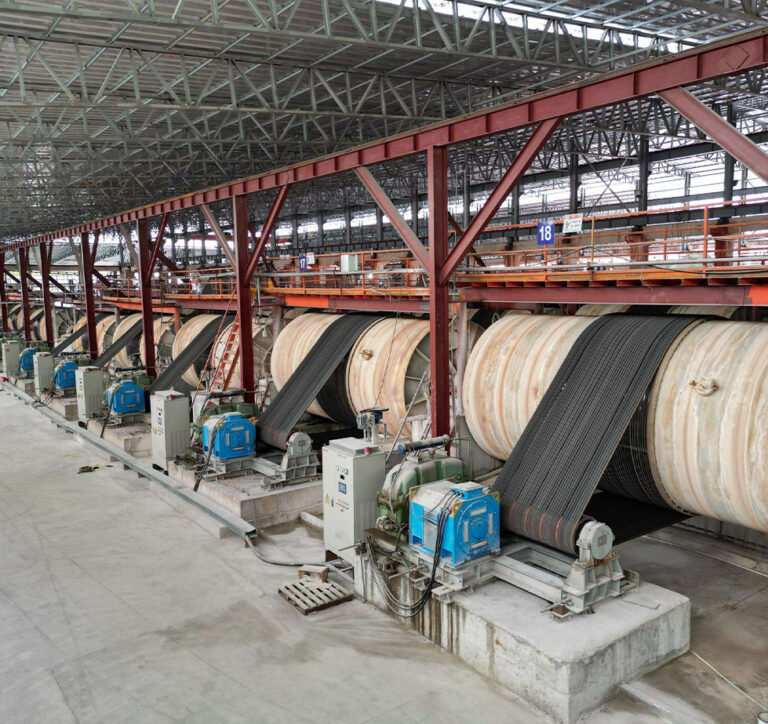
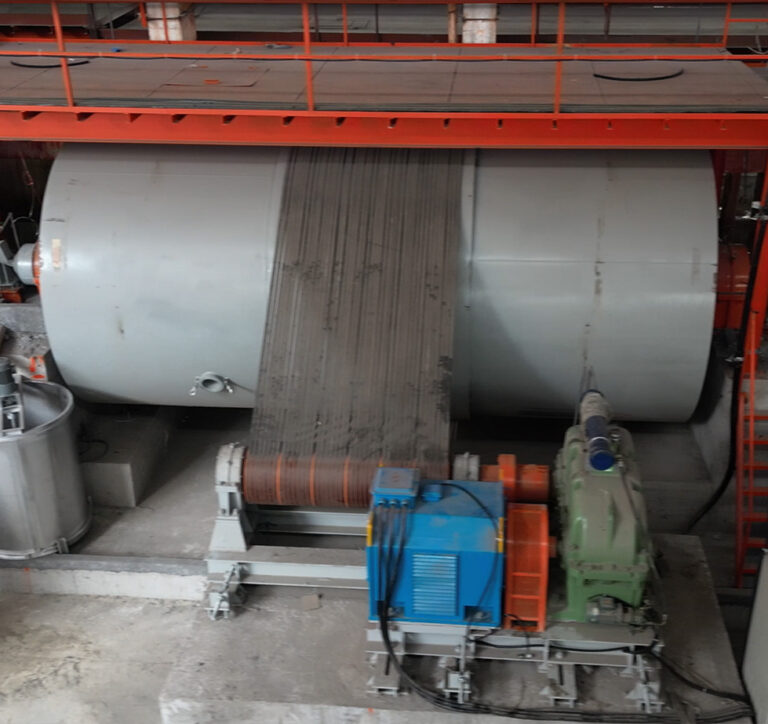
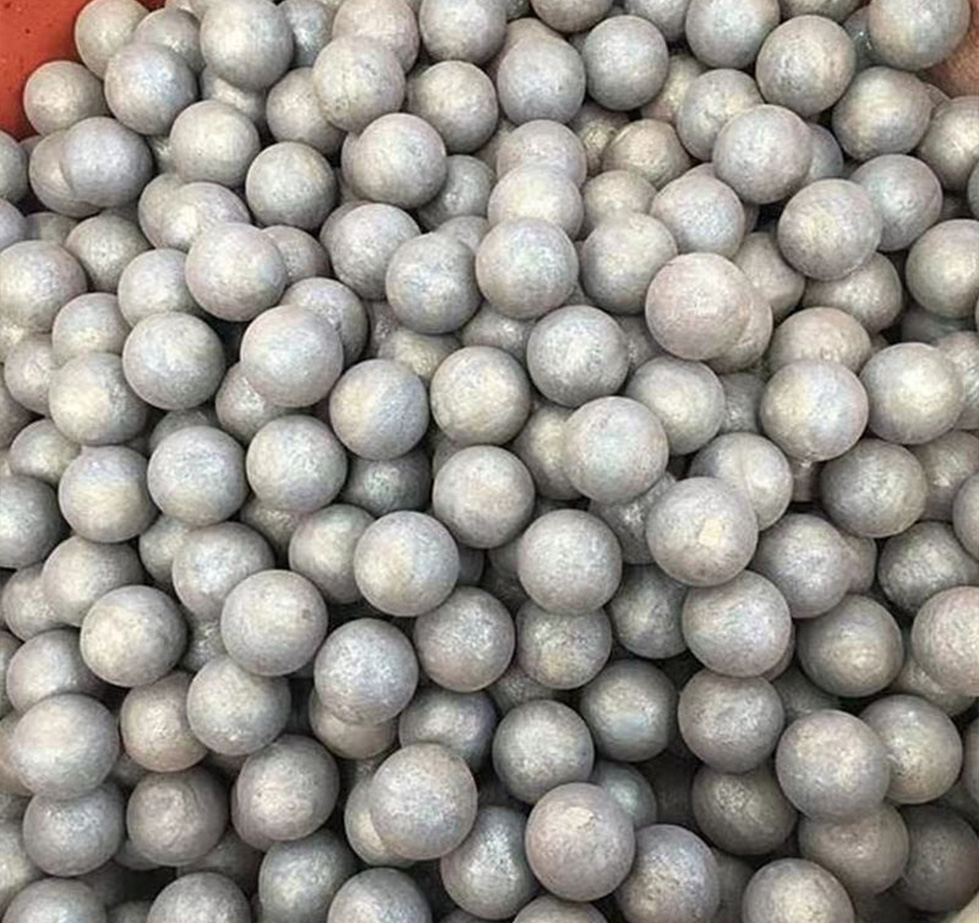
When a ball mill rotates, the component that actually crushes the ore, cement clinker, or ceramic raw material is not the shell itself—it is the hundreds of rolling grinding balls inside. Industry insiders often compare grinding balls to the mill’s “teeth,” and the analogy fits: without good teeth, even the strongest mill cannot bite through hard feed.
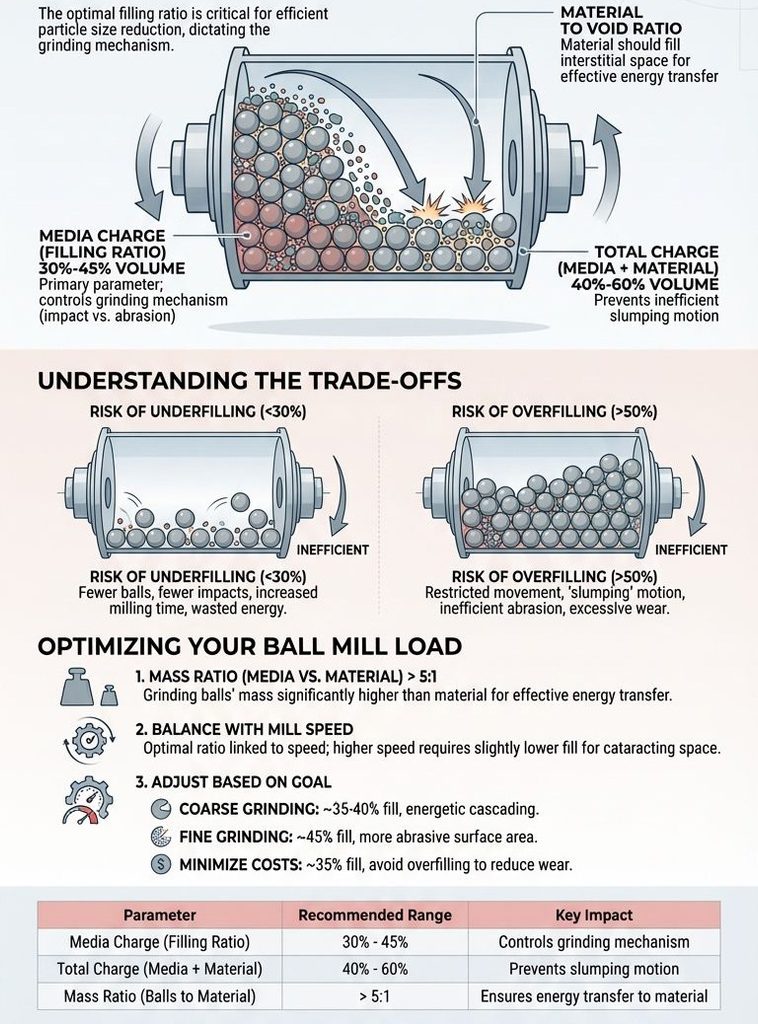
Typically, ball mill balls occupy 30%–45% of the mill’s internal volume, and the total charge (media plus material) should stay between 40% and 60%. The media-to-material mass ratio should exceed 5:1 so energy actually transfers to the feed rather than wasting motion.
2. How Ball Mill Balls Do the Work
A ball mill rotates about a horizontal axis, usually at 65%–80% of critical speed. At this speed, the charge climbs the shell and breaks away in a parabolic trajectory, striking the “toe” of the charge where material concentrates—the impact zone—while ball-on-ball and ball-on-liner sliding forms the attrition zone.
Physics determines how hard a ball hits: kinetic energy rises with mass, so at equal size and speed, a steel ball delivers about three times the impact energy of a glass ball. Higher density, however, also raises power draw and liner wear, so selection always involves trade-offs.
3. Materials Compared: Forged, Cast, and Ceramic
Ball mill balls fall into three main categories:
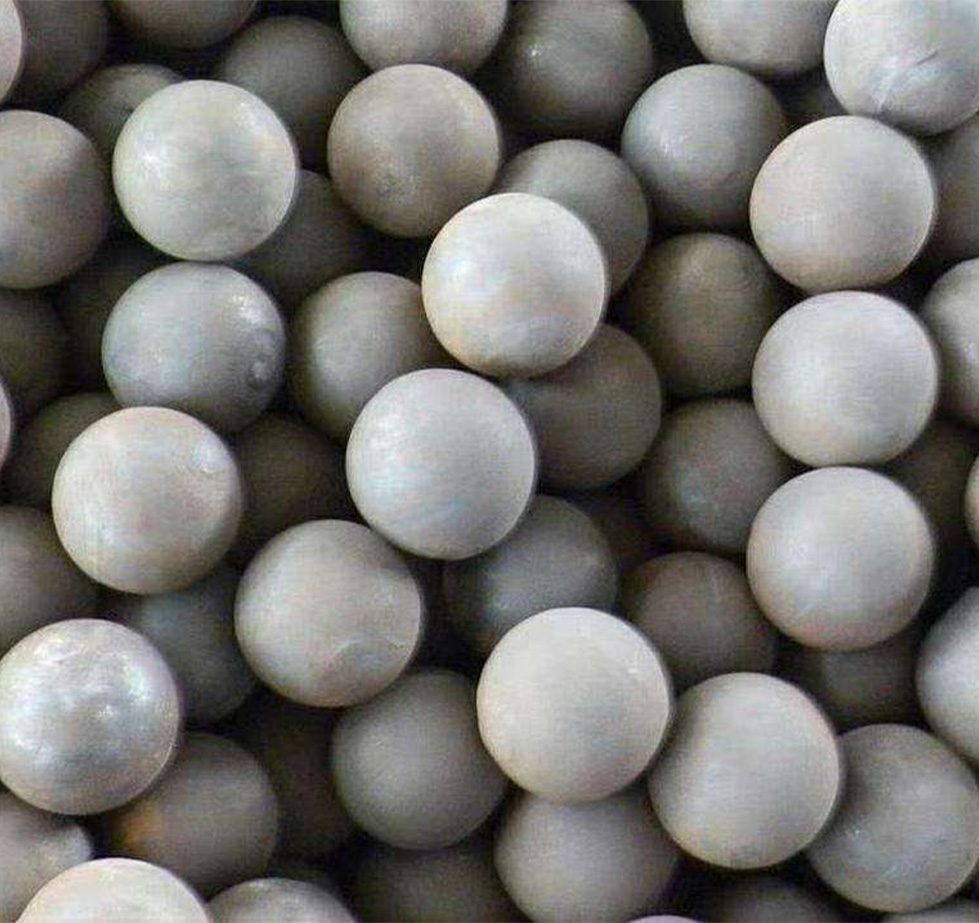
Forged steel balls: made from 45#, 60Mn, B2, B3 alloy steels through forging and heat treatment. They reach HRC 55–65 surface hardness, over 12 J/cm² impact toughness, less than 1% breakage rate, and cover diameters from 20 mm to 150 mm. Forging eliminates internal voids; the “hard shell, tough core” structure resists cracking under heavy impact, which is why mines and cement plants use them most.
Cast balls: high-chromium cast balls reach HRC 58–64 and perform exceptionally in corrosive slurries. Compared with forged steel under the same conditions, they wear 25%–30% less, and up to 50% less in highly corrosive applications.(PDF ceon.rs) Casting, however, can leave internal defects, so impact resistance trails forging.
Ceramic balls: alumina, zirconia, and zirconium silicate balls offer high hardness, chemical inertness, and minimal contamination—ideal where whiteness and purity matter—at the cost of lower density and impact energy. They usually serve fine-grinding duty.
4. Wear Data: How Many Balls Does a Ton of Ore Consume?
Grinding balls are consumables. Research shows that in abrasive gold, copper, and molybdenum ores, steel balls wear at roughly 20 μm per hour; softer ores cause 10–15 μm/hr; and secondary mills, using smaller balls of 2.5–60 mm, see 25%–40% less wear than primary grinding of the same ore.(PDF ceon.rs)
Wear also depends on more than a dozen factors, including pulp density, mill speed, and liner profile. Never buy balls on unit price alone—calculate total ball consumption per ton of ore.
5. Ball Charge Design: Gradation Decides Output
Never load a single ball size. Proven practice blends diameters: about 30% large, 40% medium, and 30% small balls (a 25/50/25 split also works), so large balls break coarse feed while smaller ones supply grinding surface area. As large balls wear down naturally, daily top-up should use only the largest diameter to maintain an “equilibrium charge.”
6. Recommendation: Minjie Machinery Mills and Grinding Balls
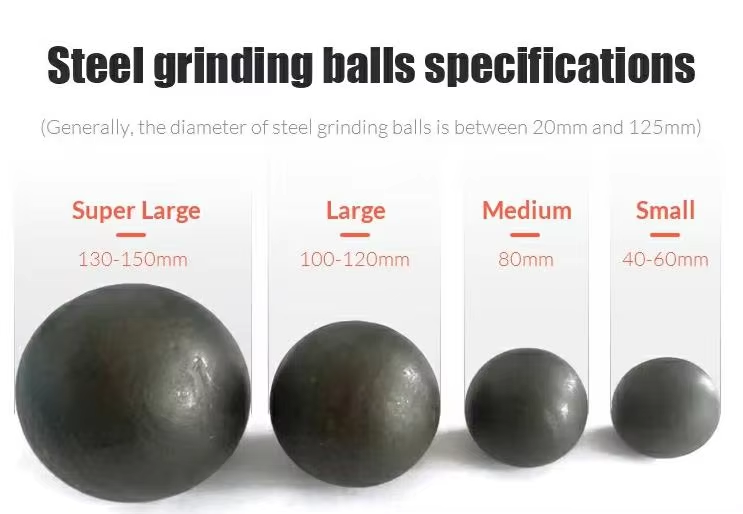
Balancing hardness, toughness, wear rate, and price, we recommend Minjie Machinery’s ball mills and grinding balls. Minjie Machinery delivers one-stop solutions:
- Full-size grinding balls: forged steel balls at HRC 55–65 with <1% breakage, high-chromium cast balls for corrosive duty, and alumina/zirconia/zirconium silicate ceramic balls for high-purity needs;
- Matching ball mills: from laboratory units to large mills for mining and cement, in dry and wet configurations, with high-manganese or rubber liners;
- Charge design service: initial ball charge calculated from feed F80, target fineness, and ore hardness, plus a make-up ball schedule.
Before ordering ball mill balls in bulk, run a small grinding test to compare unit consumption and overgrinding rates across materials.
7. Conclusion
Ball mill balls are small, but they dominate grinding costs. Choose the right material, design the right gradation, and manage top-ups well, and both ball consumption and power draw per ton drop noticeably.
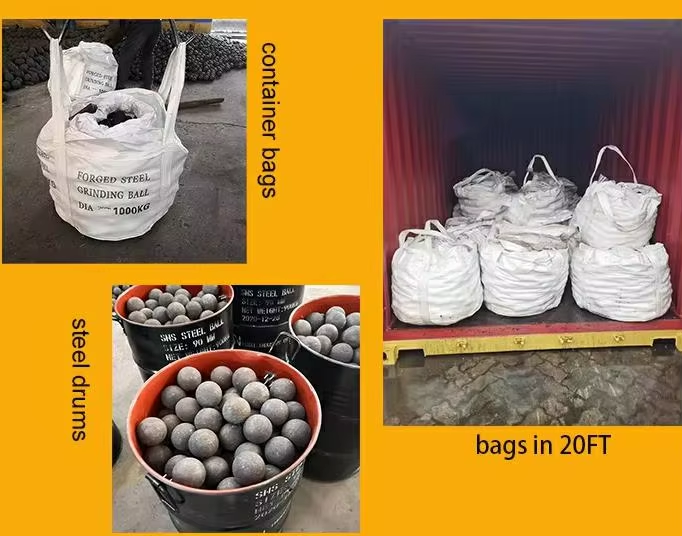
With its complete line of mills and media, Minjie Machinery helps mining, cement, ceramics, and chemical producers get the numbers right.
Contact us now for more information and product quotations.