
On-Site Aggregate Production for Road Projects
How Mobile Crushing Supports Road Construction
Road projects require large quantities of aggregates for embankments, subbase and base courses. Suitable aggregates may also enter asphalt mixtures or concrete pavement production when they meet the relevant specifications.
Traditional construction projects often purchase aggregates from distant quarries and transport them to the jobsite by truck. Long hauling distances can increase fuel consumption, logistics costs and scheduling pressure.
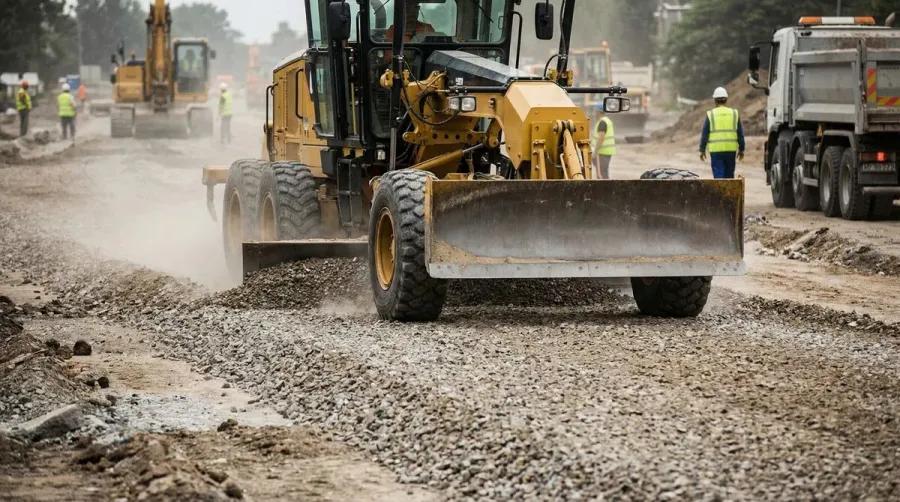
A Mobile Crushing Plant for Road Construction gives contractors another option. They can move crushing equipment close to suitable material sources, process natural rock or reclaimed concrete, and produce graded aggregates near the road section where construction takes place.
This approach can reduce some long-distance aggregate transportation and help large reconstruction projects reuse materials from existing roads. The Federal Highway Administration (FHWA) explains that properly processed reclaimed concrete can serve as granular base material. It also notes that on-site processing during large reconstruction projects may reduce aggregate hauling costs.[User Guideline: Granular Base. Covers on-site processing, jaw crushing, steel removal, secondary crushing, screening and the potential to reduce hauling costs.]
The Complete On-Site Processing Workflow
1. Survey and Test Available Materials
The project team first investigates local geology, rock deposits, existing pavement structures and available reclaimed materials.
For natural rock, engineers should evaluate hardness, abrasion resistance, weathering and clay content. For reclaimed concrete, they should check reinforcing steel, asphalt layers, soil and other contaminants.
According to FHWA, aggregates account for approximately 60% to 75% of the total volume of concrete. This gives demolished concrete potential value as a recycled aggregate source.[Describes reclaimed concrete sources, aggregate content and typical processing methods.]
However, contractors should never assume that every material found near a road is suitable for pavement construction. Engineers must collect samples, conduct laboratory tests and confirm the intended application against local road specifications.
2. Prepare the Site and Deploy the Equipment
Contractors select a stable operating area according to material availability, construction progress, access routes and safety requirements.
Wheeled mobile plants suit projects that require relocation between work areas. Tracked equipment may offer another option for certain uneven or restricted sites. The site layout should also include raw-material stockpiles, finished-product storage, loader access and truck routes.
A well-planned layout reduces unnecessary material handling and helps connect aggregate production with road construction activities.
3. Pre-Screening and Primary Crushing
Excavators or loaders feed raw material into the feeding system. A grizzly screen can separate smaller particles before crushing, while workers remove wood, plastic and other unwanted materials.
A jaw crusher commonly handles primary crushing of large rocks and suitable concrete blocks. It uses compression between fixed and moving jaw plates to reduce oversized feed.
When contractors process reinforced concrete, they must also arrange magnetic separation or another suitable method to remove steel. FHWA’s reclaimed concrete guidance describes primary jaw crushing, steel removal, secondary crushing and screening as typical processing stages.
4. Secondary Crushing and Screening
After primary crushing, material enters the secondary crushing stage. Engineers can select cone or impact crushers according to rock hardness, abrasiveness and required particle shape.
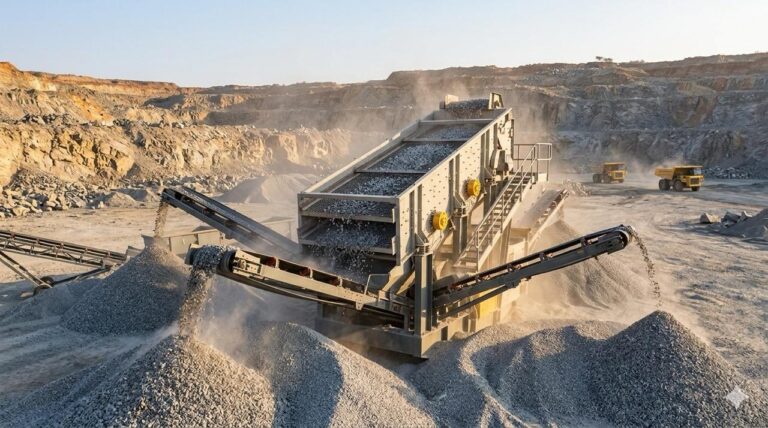
A vibrating screen separates the crushed material into different size fractions. Properly sized aggregates move to stockpiles, while oversized particles return to the crusher for further reduction.
Contractors can adjust the screen arrangement to produce the aggregate sizes required by the road design.
By integrating feeding, crushing, screening and conveying equipment, a Mobile Crushing Plant for Road Construction can create a continuous on-site aggregate production process and reduce repeated material handling.
5. Aggregate Testing and Road Placement
Quality-control personnel test finished aggregates for gradation, clay content, particle shape, strength, abrasion resistance and other project-specific requirements.
For recycled concrete aggregates, engineers should also review source quality, residual steel, contaminants and material properties that may affect pavement drainage.
After approval, aggregates can enter the specified embankment, subbase or base-course applications. Construction crews spread the material to the designed thickness, adjust moisture content where necessary, grade the surface and compact each layer.
One important distinction remains: base-course aggregates do not automatically qualify for asphalt or concrete surface layers. Each pavement layer has its own material requirements. Contractors must follow the project design and local specifications rather than using untested site material in every pavement application.
Recommended Minjie Mobile Crushing Equipment
Road projects that require frequent relocation, phased construction or on-site processing of rock and reclaimed concrete can evaluate Minjie’s mobile crushing equipment.
1. Wheeled Mobile Jaw Crusher Plant
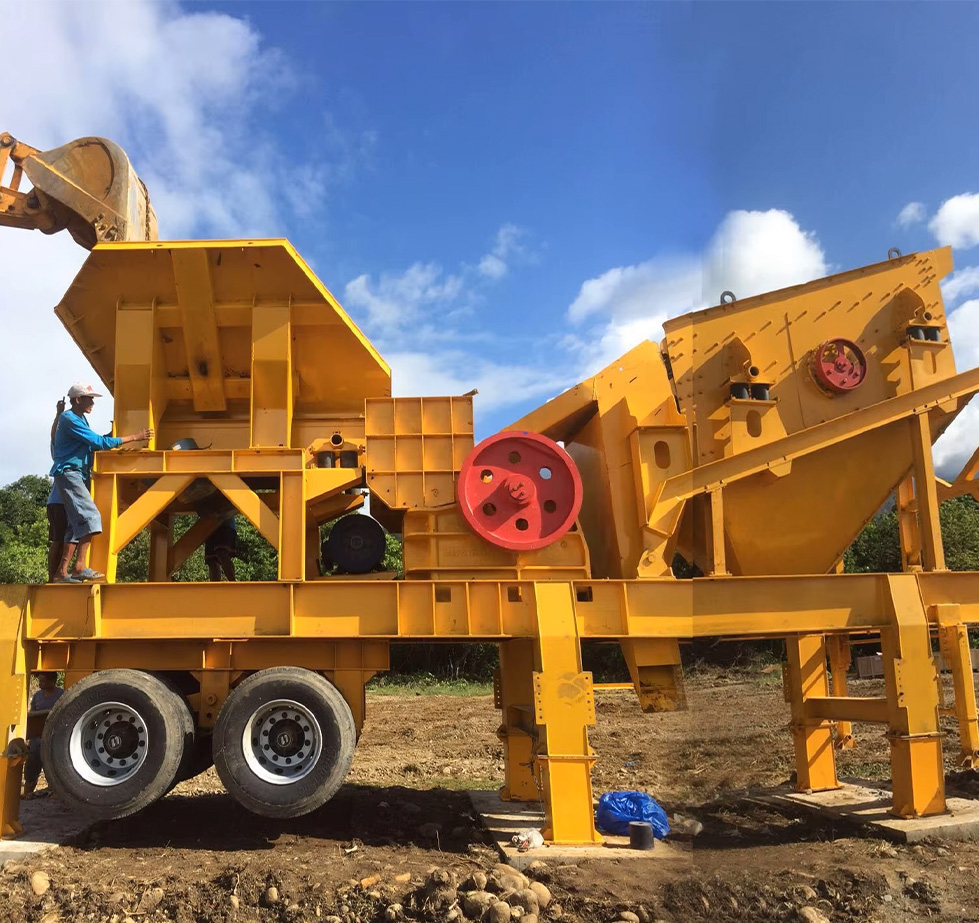
Minjie offers a wheeled mobile jaw crusher plant for projects that need a relocatable primary crushing solution. Its mobile chassis supports movement between suitable operating areas. The product page lists a capacity range of 50–300 t/h. Actual throughput depends on material properties, feed size, equipment configuration and site conditions.
2. Minjie Mobile Diesel Jaw Crusher
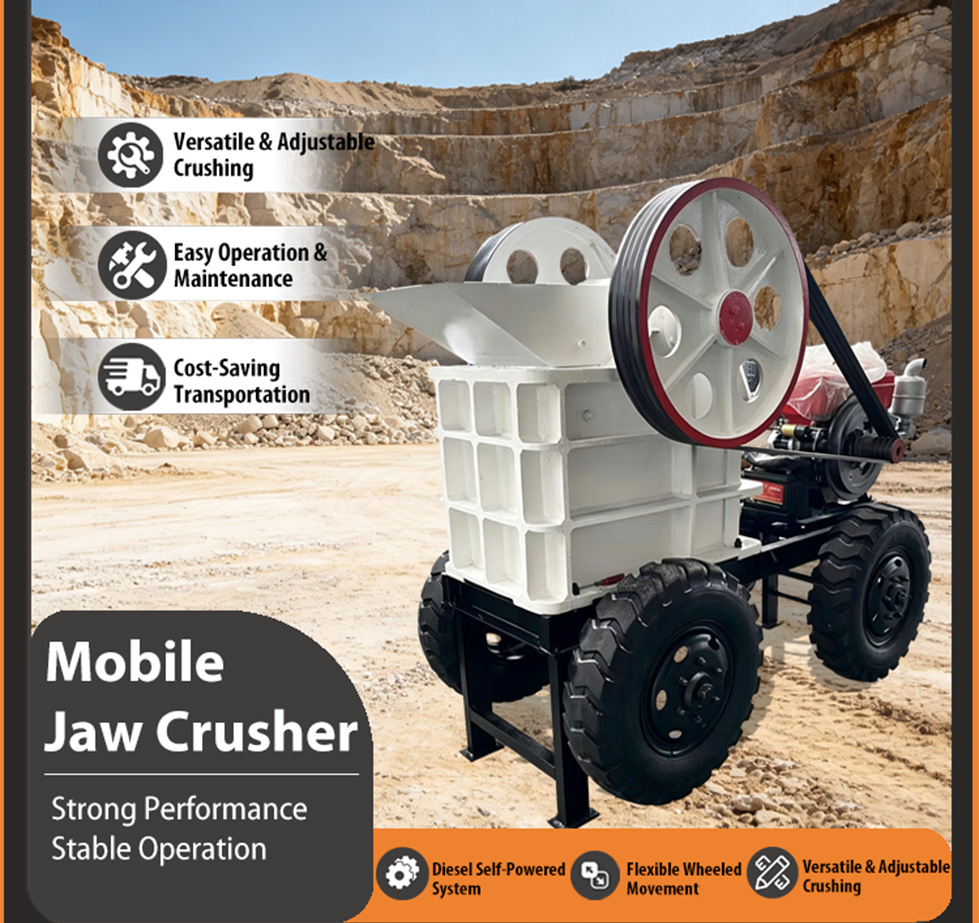
A jaw crusher can handle primary crushing of large rocks and compatible concrete feed. Minjie describes its V-shaped crushing chamber and compression-based crushing principle, making the product a useful reference when planning the primary crushing stage.
3. Type Mobile Crusher Plant Jaw Crusher
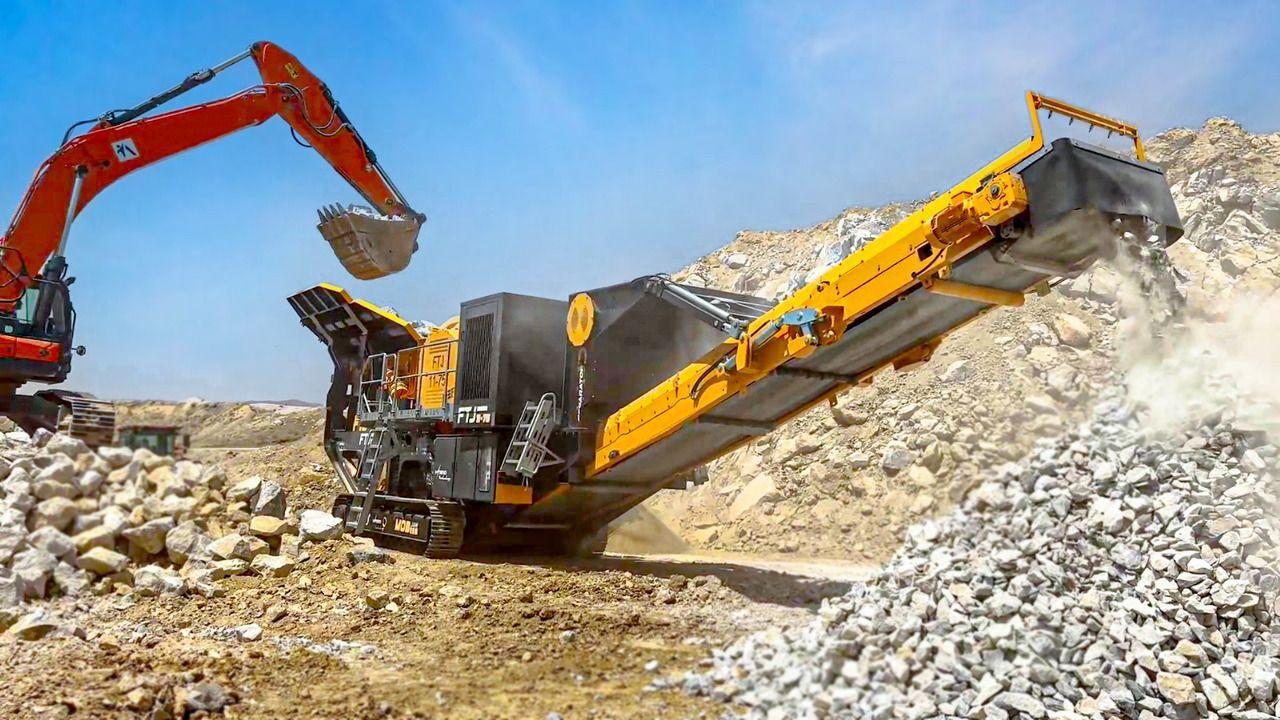
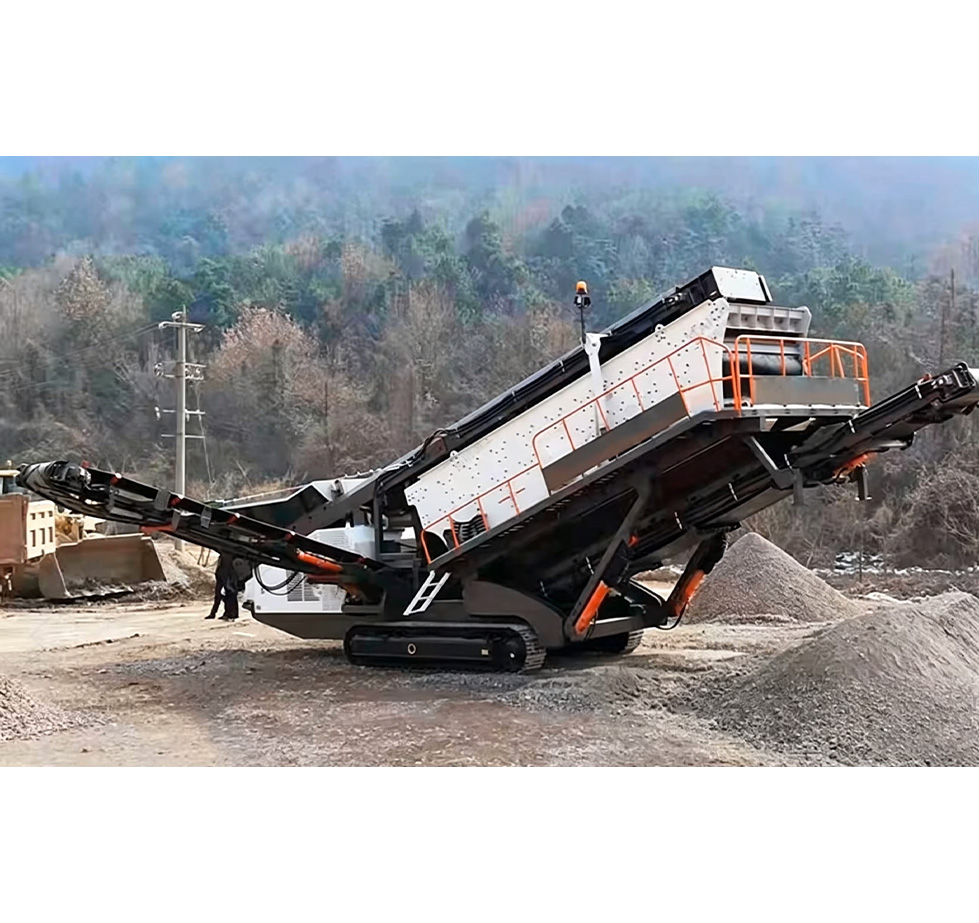
The tracked mobile jaw crushing plant is primarily suitable for primary and secondary crushing operations of medium- to low-hardness, medium- to low-abrasive materials such as limestone, dolomite, coal, construction waste, and coal gangue.
Before selecting equipment, contractors should provide Minjie with the material type, maximum feed size, target hourly capacity, required product gradation, site conditions and relocation frequency. The supplier can then assess the crusher model, screening arrangement, conveying method and expected operating capacity. Final specifications should follow the confirmed technical proposal.
Important Considerations for Road Projects
When planning a Mobile Crushing Plant for Road Construction, project managers should focus on several practical issues:
- Material quality: Test aggregate gradation, strength, abrasion resistance and clay content against the applicable road standards.
- Dust control: Install water sprays, enclosures or dust-collection systems at feeding, crushing and transfer points.
- Operational safety: Separate equipment operating zones from vehicle routes. Stop machinery and isolate hazardous energy before maintenance.
- Production coordination: Match crushing output with spreading and compaction rates to avoid excessive stockpiles or material shortages.
- Site drainage: Arrange stockpiles and operating areas to prevent erosion and mud contamination.
Conclusion
A Mobile Crushing Plant for Road Construction gives contractors more flexibility to process suitable local rock and reclaimed concrete. Through on-site sorting, crushing, screening and quality testing, projects can reduce some long-distance aggregate transportation and improve the use of available materials.
A successful solution requires more than moving a crusher to the jobsite. Contractors must test incoming materials, select compatible equipment, control finished aggregate quality and coordinate production with road placement. Minjie’s mobile crushing equipment provides an option worth evaluating when planning an on-site aggregate production system.