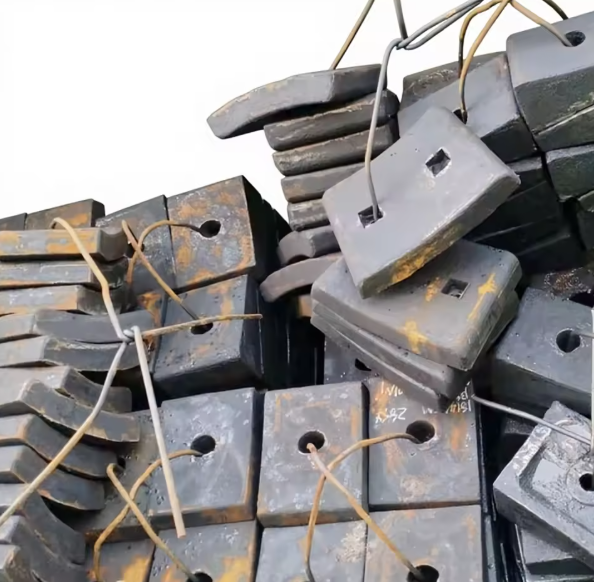

Inside a running ball mill, the shell faces constant impact from grinding media and sliding abrasion from the ore. A bare steel shell would wear through quickly. The ball mill liner solves that protection problem first. But it does more than block wear. Its material, profile, and wear state influence how the charge moves, how fine the product becomes, and where energy goes.
Two jobs, not one
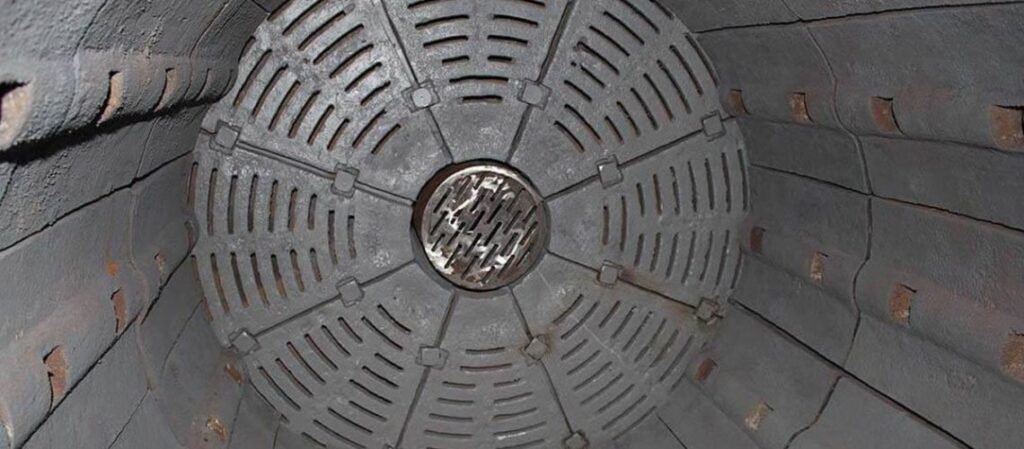
The first job is protection. The liner acts as a replaceable sacrificial layer. It absorbs impact and abrasion so the mill shell does not have to. The second job is often underestimated. The liner profile—lifter bars, waves, or steps—controls how high the media are lifted before they fall. A strong profile produces a higher ball trajectory and more impact energy. A smoother profile favors rolling, rubbing, and attrition. Coarse grinding needs lift. Fine grinding needs restraint. The spacing-to-height ratio of lifter bars also affects charge motion and mill capacity. A liner is not just a wear plate. It is a process variable cast in steel or rubber.
Material choice is a trade-off, not a ranking
Liner materials have evolved from high-manganese steel to modified manganese, medium- and high-carbon alloy steels, high-chromium cast iron, rubber, ceramics, and composites. Each material owns a specific window.
High-manganese steel offers toughness. It resists fracture under large-ball impact, which suits coarse grinding and coarse feed. Medium-alloy steel, after double-medium quenching, reaches HRC 45–55 with impact toughness above 25 J and lasts more than twice as long as high-manganese steel. High-chromium iron pushes wear resistance further. Under identical conditions, its wear performance is about four times that of high-manganese steel and twice that of low-chromium alloy steel. But high-chromium liners are brittle. Tramp metal in the feed can crack them.
Rubber takes a different route. Its density is roughly one-sixth that of manganese steel. Rubber liners weigh 50–85% less and cut energy use by 10–15% in wet grinding. Rubber also damps noise. A mill with manganese liners often runs at 100–110 dB. Rubber can bring that down by 8–15 dB. In wet service, rubber resists slurry corrosion and lasts two to four times longer than manganese steel. But rubber is not universally better. A model-mill study found that rubber outperformed metal liners only when the ground material was very hard. For softer feeds, metal liners wore less. Wear depended mainly on the hardness ratio between liner and mineral, mill speed, and solids content—not simply on feed rate or ball size.(sciencedirect)
Ceramic liners—high-alumina or zirconia—solve a different problem: contamination. When grinding battery materials, electronic ceramics, or pigments, iron wear debris ruins product purity. High-alumina ceramic liners, paired with high-alumina or zirconia media, keep metallic contamination low.
Wear changes geometry, and geometry changes grinding
As a liner wears, its profile changes. Lifters get shorter. Waves flatten. The ball trajectory shifts, and grinding efficiency drifts with it. A liner can still have measurable thickness left while no longer lifting the charge to the design height. At that point, the mill may be saving liner cost but paying in energy and product consistency.
Wear benchmarks help separate normal from abnormal. Bond’s method predicts ball mill liner consumption at about 9.5 g/kWh. In practice, shell liner wear runs around 5 g/kWh, with about 3 g/kWh more attributed to scrapping. These figures shift with ore, mill size, and operating conditions, but they give a reference point. China also has GB/T 25705-2010, a standard for liner wear in overflow ball mills that defines test methods and wear-rating classification. Asking a supplier for comparable wear data is more useful than comparing material grades alone.
Questions that actually decide the choice
When you evaluate a ball mill liner option, start with the duty. Coarse feed and high impact point toward manganese or alloy steel. Wet fine grinding of hard, corrosive slurry makes rubber worth a serious look. Iron-sensitive products make ceramic the default. Then match the liner to how the mill runs. Speed, ball load, and pulp density all change wear rate. The liner has to fit those conditions, not stand alone as “the hardest available material.”
Ask about profile as well. Coarse chambers need tall lifters at the right spacing. Fine chambers need a lower profile that favors attrition. Different chambers in the same mill can use different liners. Finally, ask about supply and change-out. Liners are consumables. Custom sizing, stable quality, and reliable delivery directly affect downtime.
Minjie Machinery’s liner logic
Fujian Minjie Machinery has built grinding and material-processing equipment since 1988, with more than three decades of experience in ceramics, building materials, mining, and advanced materials. Its liner range covers high-manganese steel, high-chromium steel, rubber, and high-alumina ceramic, with customization by working condition.
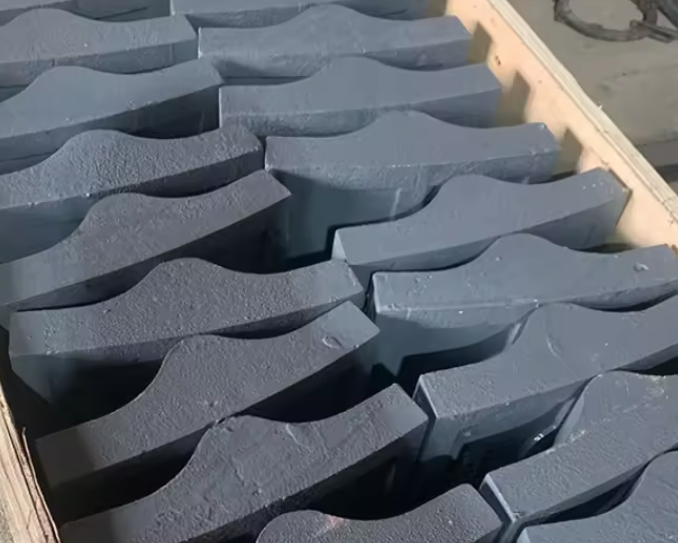
For wet grinding or noise- and energy-sensitive operations, Minjie offers butyl rubber liners with high-alumina media. For heavy-duty mining and cement duty, high-chromium liners take the wear. On its ultrafine continuous mills, Minjie pairs high-strength ceramic liners with high-alumina or zirconia balls for lithium mica, graphite, and pigments—materials that are sensitive to metal contamination or prone to agglomeration. The approach is not to sell one universal liner. It is to let material and profile follow the duty. That is also the most practical rule in ball mill liner selection.
Closing
A liner is a consumable, but how it wears determines how the mill works. Treat it as a wear plate, and the decision reduces to hardness and price. Treat it as part of the process system, and the questions become: does the material match the ore, does the profile match the grinding target, and does the wear pattern match the energy budget. The ball mill liner carries more influence over stable, efficient grinding than its modest place on the spare-parts list suggests.
Contact us now for more information and product quotations.