
1. What Is a Continuous Ball Mill?
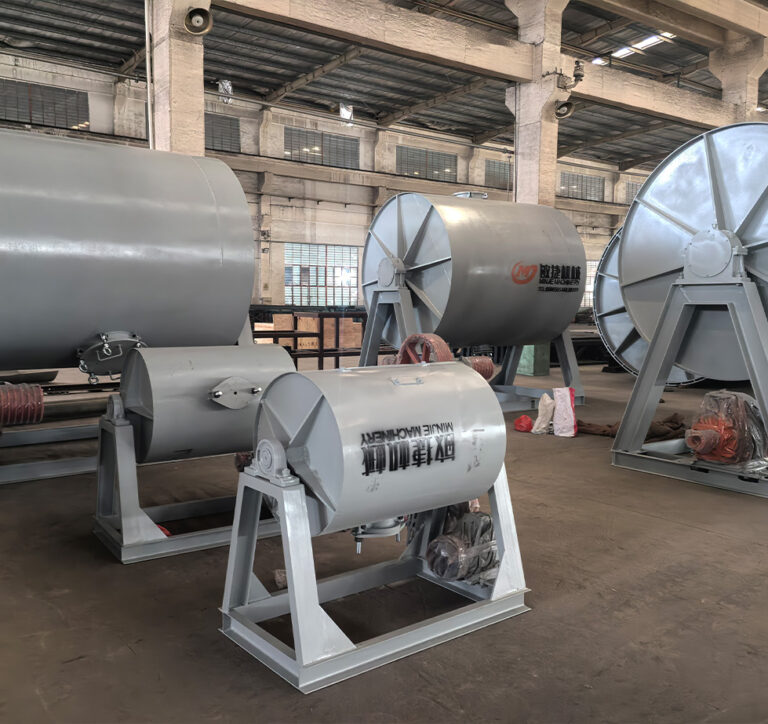
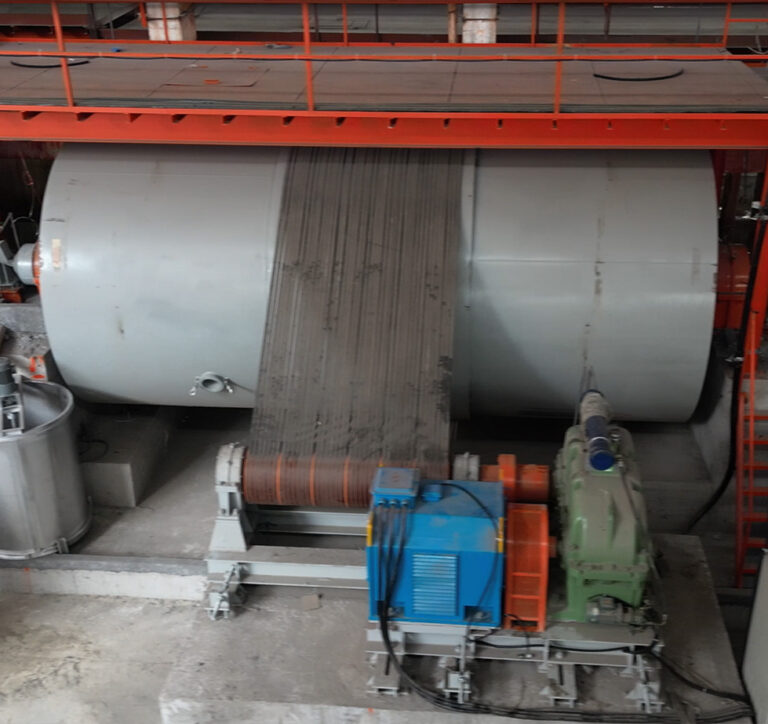
Ball mills fall into two families: batch mills, which load and unload material charge by charge, and continuous mills, which never stop. A continuous ball mill feeds raw material steadily through one end of the cylinder and discharges ground product from the other, all without interrupting the grinding action. This design suits cement plants, mineral concentrators, and chemical factories where feed arrives steadily and product must flow out consistently—supporting true 24/7 operation.
2. Continuous vs. Batch: Where the Advantage Lies
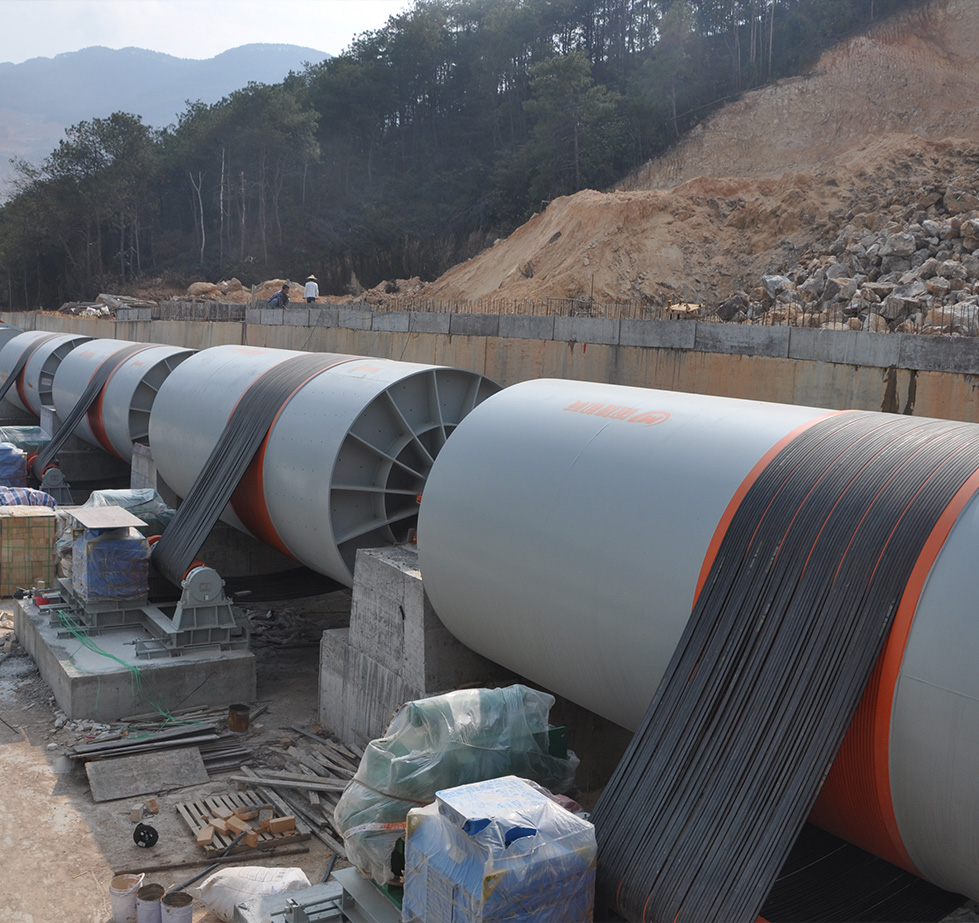
The difference between the two modes is fundamentally “time-based control” versus “fineness-based control.” A batch mill discharges everything when the preset time expires, so the product mixes overground fines with still-coarse particles, often demanding an extra screening and regrinding step. A continuous mill releases material by fineness: qualified fines pass the discharge grate or overflow, while oversize keeps grinding inside—naturally delivering a uniform product.
The efficiency gap is just as clear. Continuous machines skip the loading, unloading, and cleaning pauses of every batch cycle, so they deliver higher output per hour at lower labor cost per ton; batch machines win on recipe flexibility for multi-product, low-volume work. Industry guidance is blunt: large-capacity requirements usually point directly to continuous horizontal ball mills with a feed chute and an integrated discharge system such as a trommel screen or spiral classifier .
3. Open Circuit vs. Closed Circuit: The Production Watershed
A continuous ball mill frequently pairs with classification equipment to form a circuit. In an open circuit, material passes through the mill once regardless of size; in a closed circuit, a hydrocyclone or spiral classifier returns coarse particles automatically. Controlled experiments show that at identical product fineness, closed-circuit production runs about 5% higher than open circuit, while power demand per unit of output drops by about 5%.
Closed circuits also deliver a hidden benefit: they prevent overgrinding. In open circuits, already-fine particles must travel the full mill length and get crushed into useless slimes, wasting electricity and contaminating the product; closed circuits withdraw compliant fines immediately, so energy works only on coarse feed. Liner and ball wear fall accordingly, cutting media cost per ton of ore. In a typical closed loop, the ore circulates through the mill two to three times before meeting spec.
4. Capacity and Specifications: From Tons to Thousands of Tons
Industrial continuous ball mill parameters span a wide range: feed size generally below 25 mm, unit capacity from 0.65 to 615 tons per hour, and discharge fineness between 0.075 and 0.4 mm. Take the MQY overflow wet mills as an example: effective volumes of 10.5–25.8 m³, capacities of 5.8–16.5 t/h, discharge at 0.3–0.074 mm, and machine weights of 35–108 tons. Wet continuous mills can also carry optional automation that tracks slurry density, particle size, and energy consumption in real time—making the operating condition visible.
5. Recommendation: Minjie Machinery Continuous Ball Mills
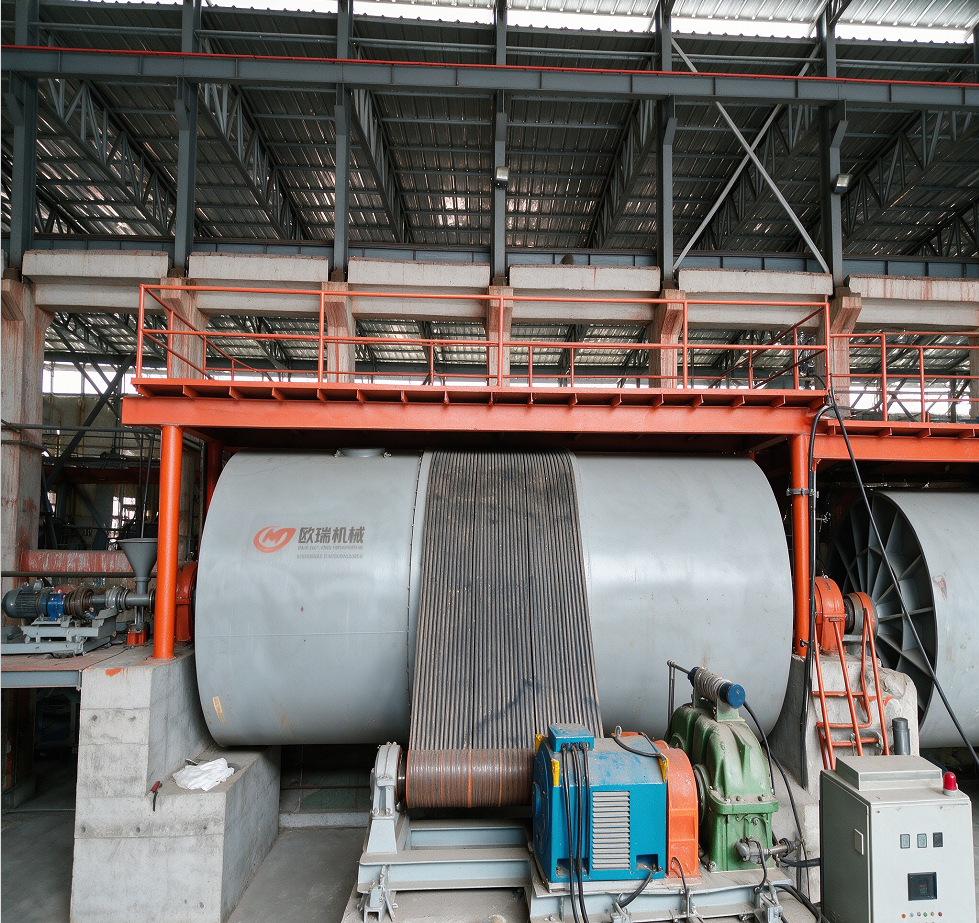
Weighing capacity coverage, circuit integration, and wear-resistant configuration, we recommend Minjie Machinery’s continuous ball mill series, with four core strengths:
- Full size range: from 0.65 t/h compact units to several-hundred-ton giants, in dry, wet, overflow, and grate types, serving cement, mining, and chemicals alike;
- Turnkey circuits: mill plus spiral classifier or hydrocyclone plus feeder, delivered as a line—closed-circuit gains of about 5% more output and about 5% less energy from day one ;(ScienceDiert)
- Long wear life: high-manganese or rubber liners matched with forged steel and high-chromium cast balls, synchronizing consumable life and lowering media cost per ton;
- Smart control: variable-frequency speed, closed-loop feed rate, and current and load monitoring prevent blockages and overloads while supporting 24-hour continuous duty.
Before ordering a continuous ball mill, prepare three figures: hourly throughput, feed size (F80) and target fineness (P80), plus material hardness and abrasiveness—then let the supplier size the shell, speed, and media gradation accordingly.
6. Conclusion
The continuous ball mill trades on a simple “feed in, product out” logic and earns three returns: uniform particle size, stable output, and lower labor. Add closed-circuit classification, and overgrinding waste plus media consumption drop again. With its complete model lineup, turnkey circuit solutions, and wear-resistant configuration, Minjie Machinery gives cement, mining, and chemical producers the full continuous-grinding answer—from single machines to whole lines.
Contact us now for more information and product quotations.