
1. What Is an Ultrafine Grinding Ball Mill?
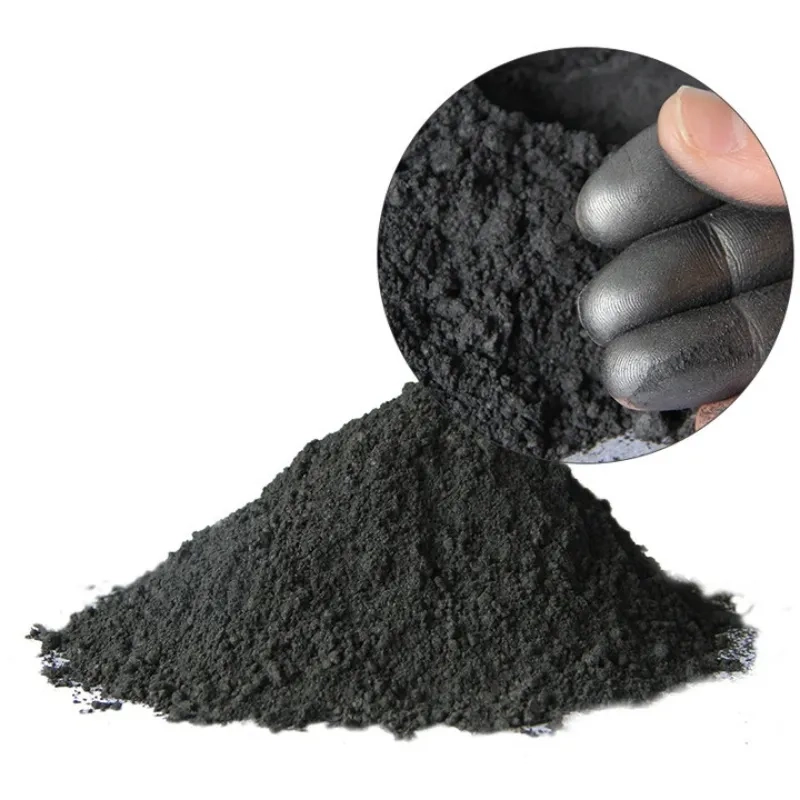
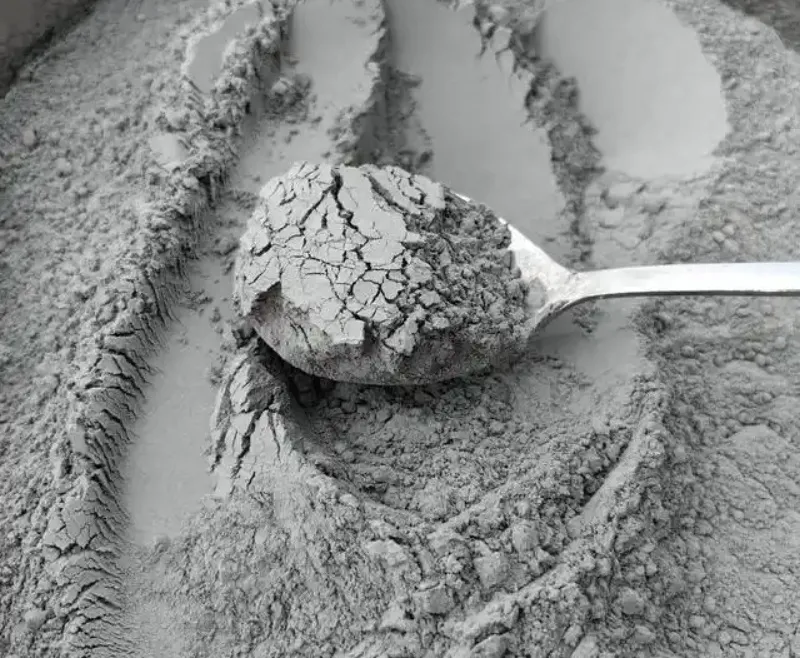
Ordinary ball mills stop at tens or hundreds of microns, but coatings, ceramics, pharmaceuticals, and electronic materials demand far finer powders. The Ultrafine Grinding Ball Mill exists precisely for micron and sub-micron duties—industrial applications commonly require most product particles below 5 μm, which already pushes conventional mills to their limit.(ScienceDirect) Through higher energy density, finer media, and precise classification, ultrafine ball mills hold D97 (the size through which 97% of particles pass) steadily at 10 μm or finer.
2. Three Main Types: Planetary, Stirred, and Vibratory
By working mode, the Ultrafine Grinding Ball Mill family divides into three types:
Planetary: grinding jars revolve around a sun wheel while counter-rotating on their own axes. Balls collide at high speed under superimposed Coriolis forces, reaching nano sizes (below 100 nm) within minutes—the workhorse of laboratories and advanced-material R&D.
Stirred (sand-mill type): a high-speed agitator inside the chamber transfers kinetic energy directly to media and material. Media filling can far exceed that of conventional ball mills, and energy input is extremely high—ideal for continuous wet ultrafine grinding in ceramics, inks, and agrochemicals
Vibratory: the cylinder executes high-frequency harmonic vibration, and the media repeatedly impact, compress, and shear the material within tiny amplitudes, achieving micron fineness in a compact body—suited to small- and medium-batch dry ultrafine milling.
3. Where Fineness Comes From: Media, Energy, and Classification
To run an Ultrafine Grinding Ball Mill well, three elements must all be in place:
- Fine media: media diameter must be several times the target size—grinding to 5 μm typically calls for 0.5–2 mm beads. Small beads offer large surface area but weak per-ball impact, so rotation speed or agitation intensity must compensate;
- Sufficient energy: specific energy rises exponentially with fineness—the true watershed between ultrafine and conventional milling. Thanks to their extreme energy density, stirred mills have largely replaced traditional grinding systems worldwide ;
- Precise classification: fines must leave the chamber promptly. In closed circuits, a turbine classifier blows compliant fines onward while returning coarse particles for regrinding, preventing overgrinding and keeping the distribution narrow. Basalt ultrafine practice shows that optimized ball-mill-plus-classifier lines with precise airflow control deliver stable D97 10 μm products .
Wet ultrafine mills can add cooling systems to protect heat-sensitive feeds, and some advanced models consume 30% less energy than conventional mills while matching twice the capacity of jet mills at equal power.
4. Applications: Where “Too Fine to See” Matters
The Ultrafine Grinding Ball Mill serves high-end manufacturing across the board: ceramic glazes and electronic pastes demand sub-micron uniform dispersion; pharmaceutical micronization breaks cell walls to extract active ingredients; coatings and inks gain hiding power and gloss from ultrafine pigments; and the performance of lithium battery materials, catalysts, and phosphors ties directly to particle size. Simply put, finer powder means higher added value—and a bigger role for the ultrafine mill.
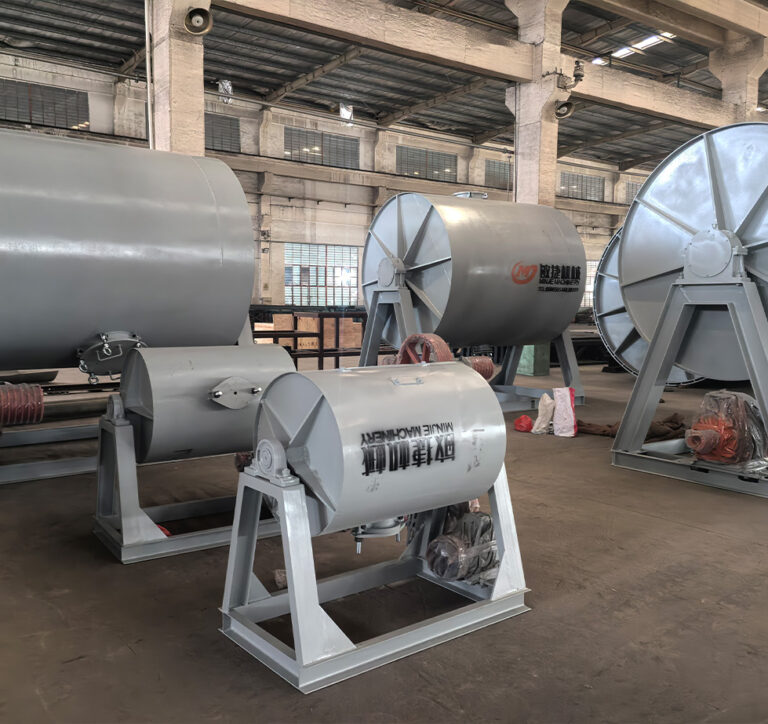
5. Recommendation: Minjie Machinery Ultrafine Continuous Ball Mills
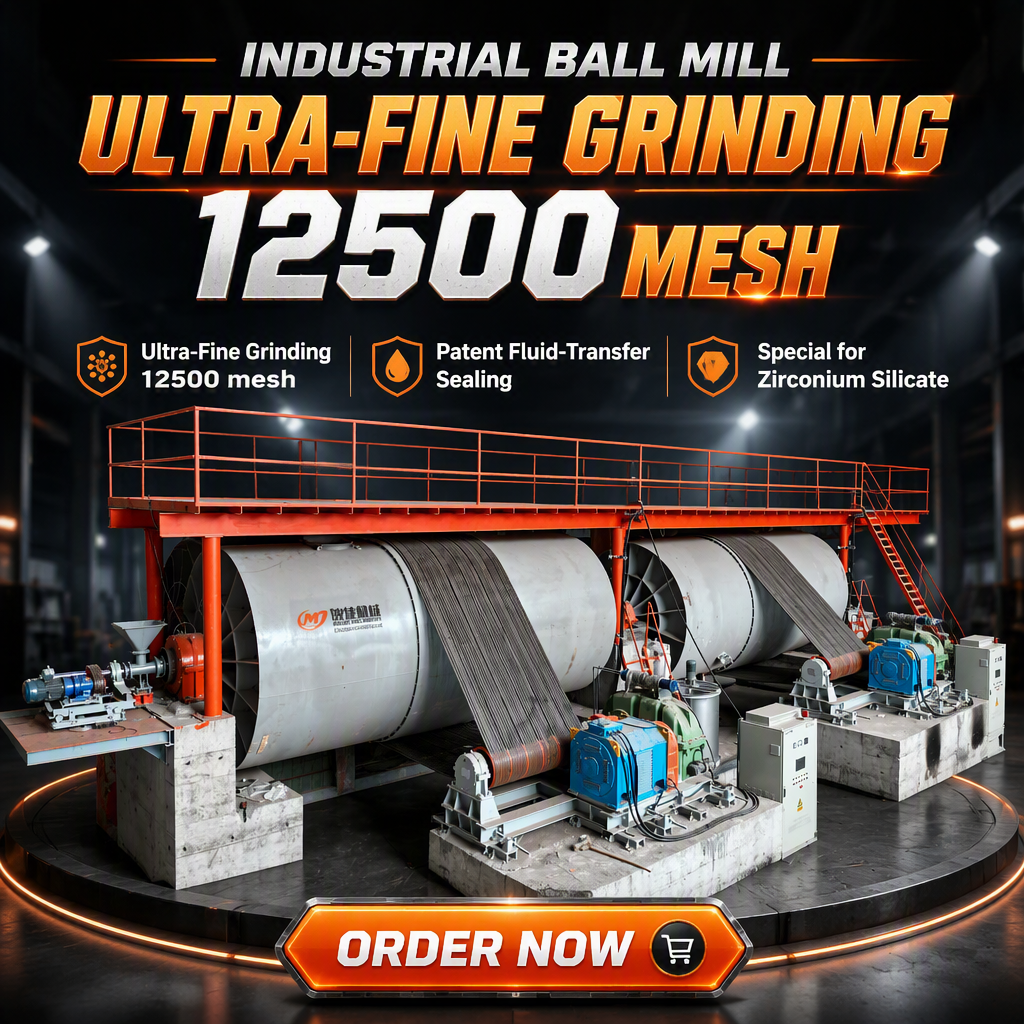
Weighing fineness stability, capacity, and energy use, we recommend Minjie Machinery’s ultrafine continuous ball mill series, with four core strengths:
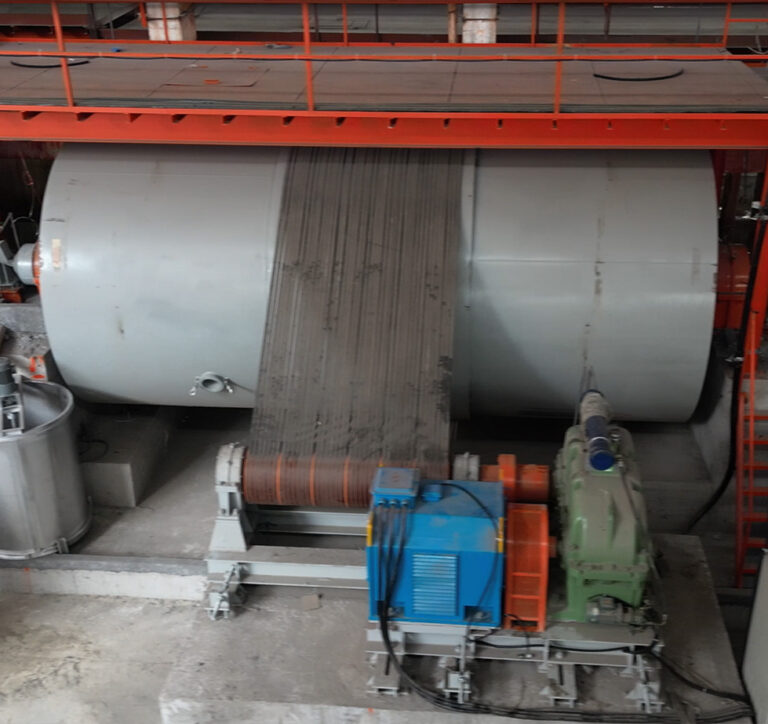
- Integrated closed circuit: ball mill and high-precision turbine classifier in one package, coarse particles returning automatically, D97 adjustable continuously from 5 to 45 μm;
- Wear-resistant fine media: zirconia and zirconium silicate grinding balls supplied in matching grades, with low wear and minimal contamination—even for whiteness-critical products;
- Continuous stable duty: variable-frequency speed plus metered feeding, 24-hour operation, hourly output from tens of kilograms to several tons;
- Green and efficient: pulse dust collection and negative-pressure conveying contain all dust, with energy consumption significantly below conventional setups.
Before ordering an Ultrafine Grinding Ball Mill, prepare three figures first: target fineness (D50/D97), hourly throughput, and material hardness plus heat sensitivity—then let the supplier run bench tests to fix media ratios and the process route.
6. Conclusion
The Ultrafine Grinding Ball Mill pushes “grinding finer” into the micron and sub-micron era through higher energy density and precise classification. Choose fine media, feed enough energy, and withdraw fines quickly—then fineness, output, and energy efficiency fall into balance. With its closed-circuit, turnkey ultrafine continuous ball mills, Minjie Machinery gives ceramics, coatings, pharmaceutical, and new-energy material producers a powder solution that meets spec consistently.
Contact us now for more information and product quotations.