
Iron Ore Crushing Line: Process Flow and Equipment Selection Guide
Why Does Iron Ore Need Crushing?
Run-of-mine iron ore often contains large rocks that cannot enter screening, grinding or beneficiation equipment directly. Crushing reduces the ore size step by step and prepares the material for transportation and downstream processing.
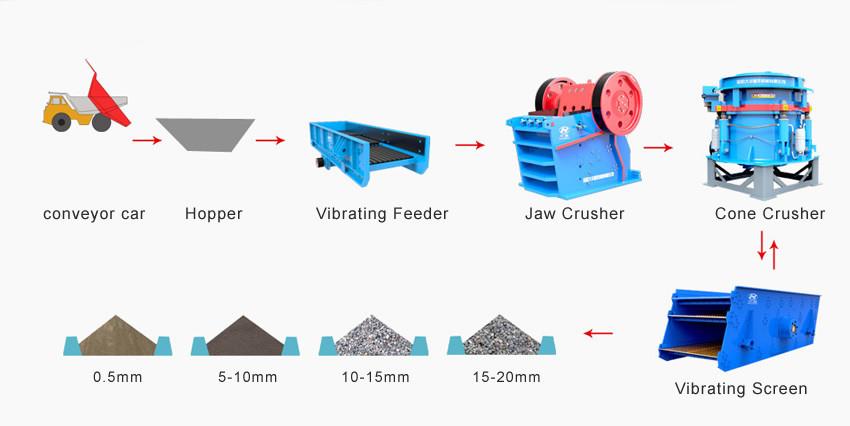
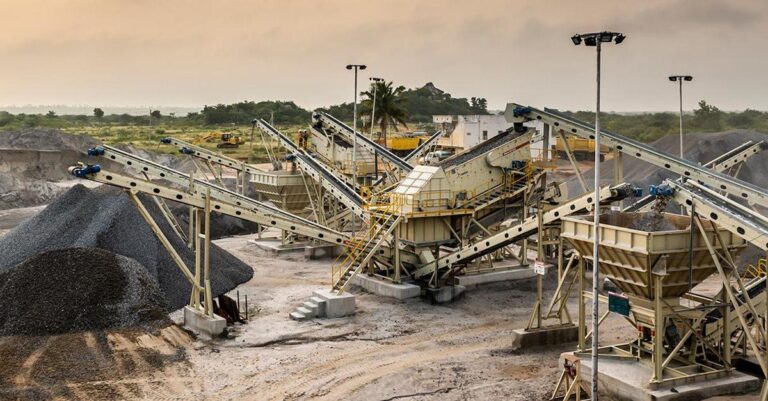
A typical Iron Ore Crushing Line includes an ore hopper, feeder, crushers, vibrating screens and belt conveyors. Engineers select two-stage or three-stage crushing according to ore hardness, feed size, capacity and final product requirements.
The Indian Bureau of Mines reports that some run-of-mine iron ore lumps can reach approximately 900–1,200 mm. Primary crushing can reduce the material to around 150–200 mm, depending on ore characteristics and equipment design.[Indian Bureau of Mines, Monograph on Iron Ore]
1. Ore Receiving and Pre-Screening
Mining trucks deliver run-of-mine ore to a receiving hopper. A feeder then transfers the material at a controlled rate to the screening or crushing section.
A grizzly or pre-screen can remove undersized material before primary crushing. This step reduces unnecessary crusher loading. If the ore contains significant clay, operators should also evaluate washing or desliming requirements.
Stable feeding helps prevent blockages and supports continuous production.
2. Primary Crushing: Reducing Large Ore Lumps
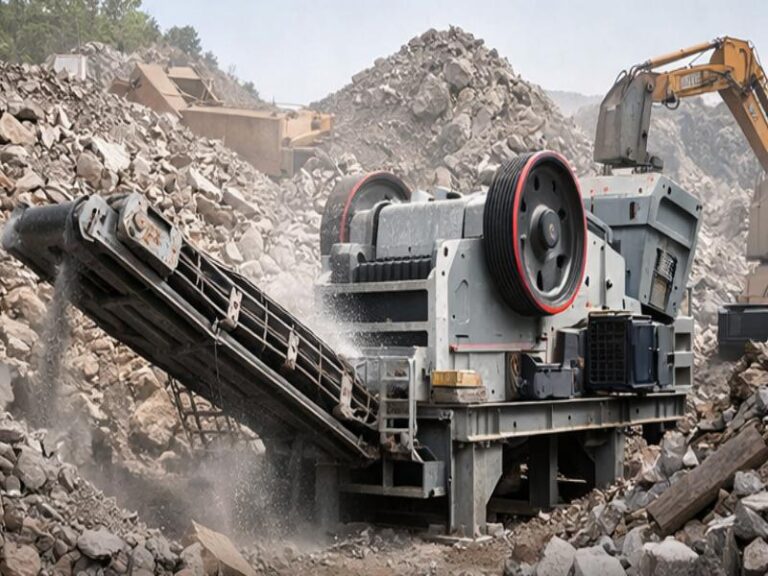
Primary crushing reduces large ore blocks into manageable sizes for conveying and secondary crushing. A jaw crusher uses a fixed jaw plate and a moving jaw plate to compress the ore.
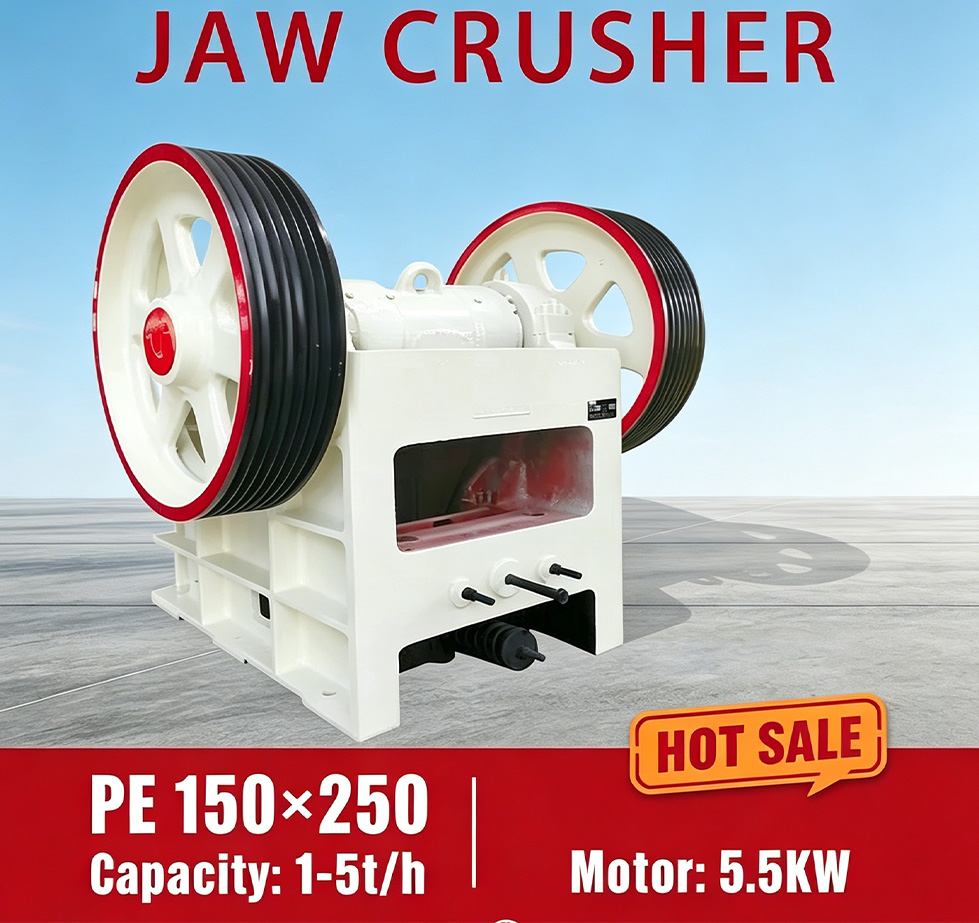
Minjie’s Jaw Crusher is one option to evaluate for this stage. Its website describes a V-shaped crushing chamber, wear-resistant components and maintenance-oriented design features. Buyers should confirm maximum feed size, capacity, discharge setting and wear-part suitability before ordering.
3. Secondary and Tertiary Crushing
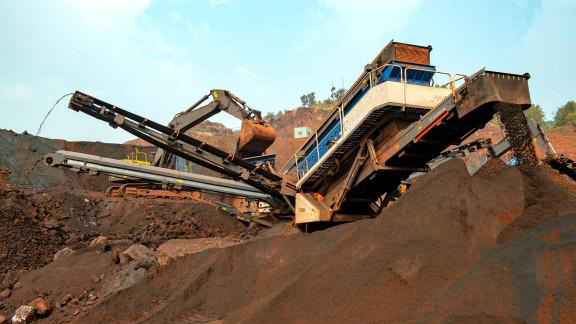
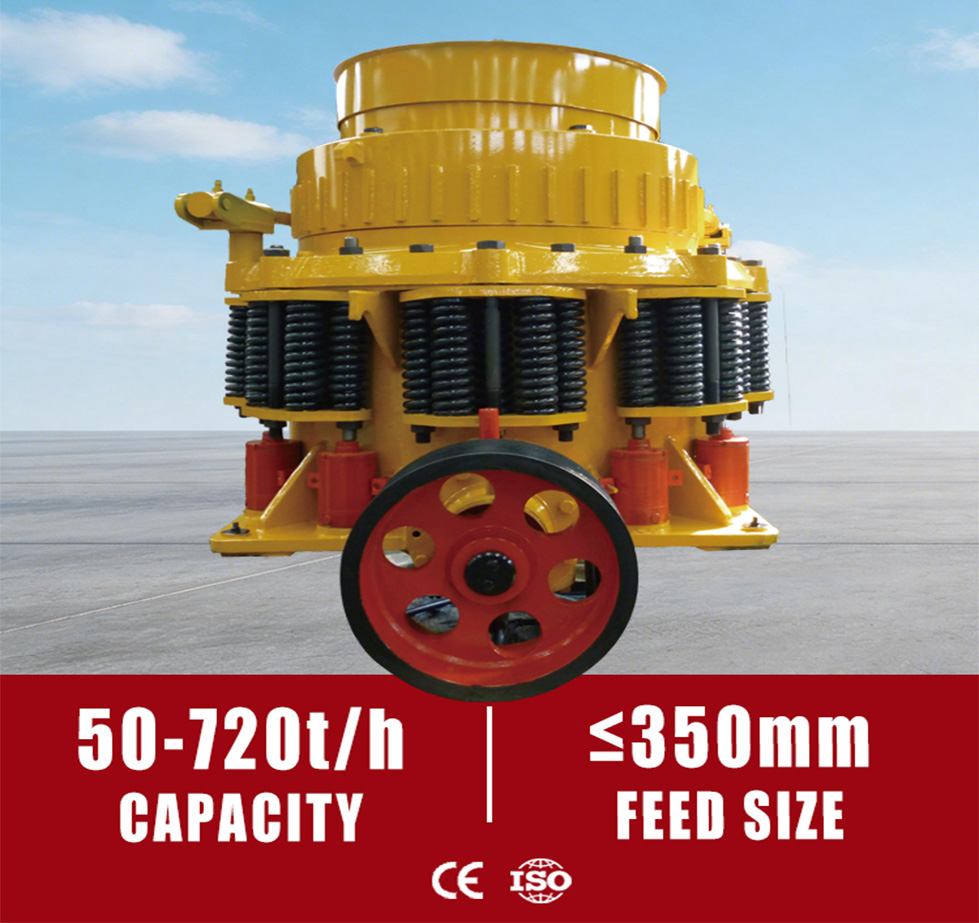
After primary crushing, conveyors transfer the ore to secondary crushing. Cone crushers commonly handle secondary and tertiary duties in hard-rock processing. Their compression action further reduces particle size.
Minjie’s Crusher Machine Guide introduces jaw, cone and other crusher types. Project engineers can evaluate the appropriate equipment combination according to ore properties, throughput and required product size.
Some projects also require tertiary crushing to prepare finer material for grinding. However, not every plant needs three crushing stages. Ore testing and process design should determine the most economical arrangement.
4. Screening and Oversize Recirculation
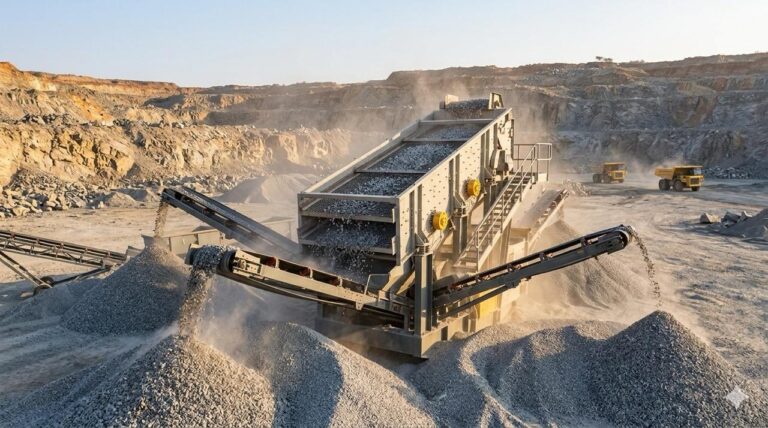
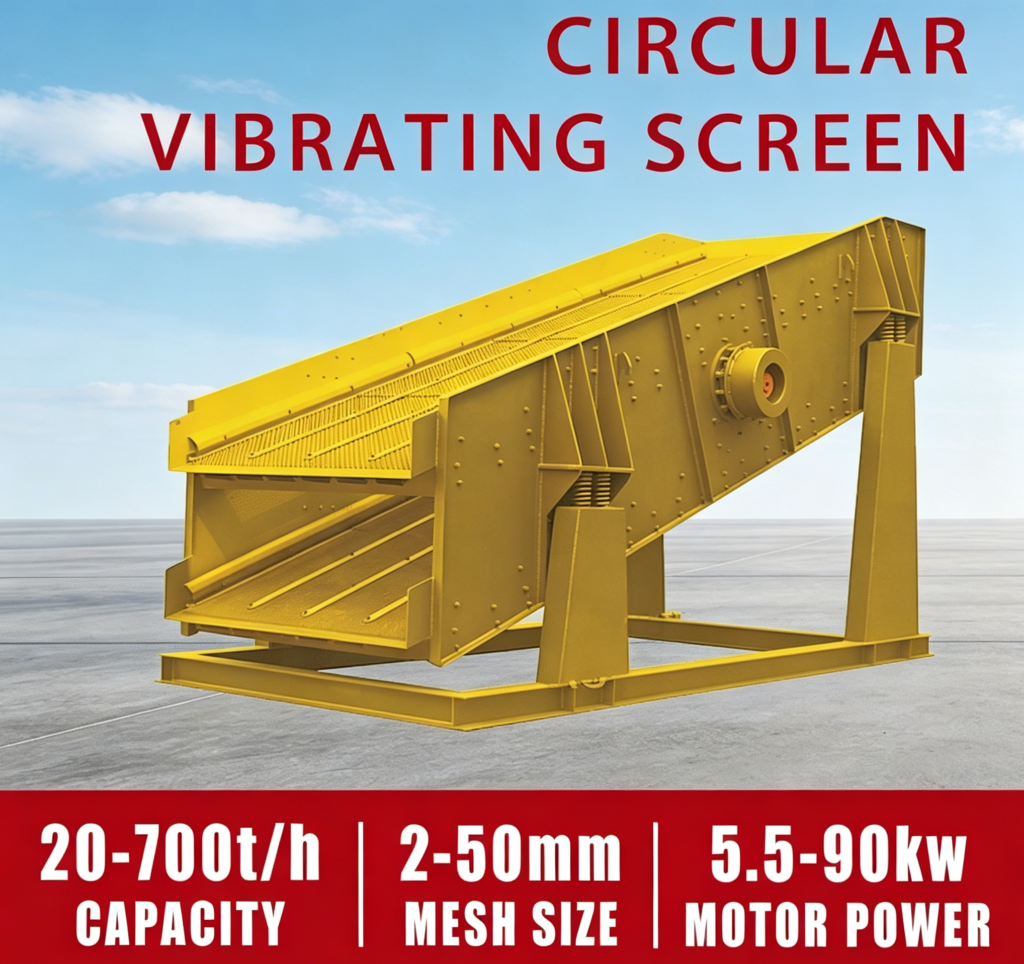
Vibrating screens separate crushed ore into different size fractions. Correctly sized material moves to the next process, while oversized particles return to the crusher for further reduction.
This closed-circuit arrangement helps control product size and reduce oversize material. Minjie’s mineral processing handbook illustrates typical multi-stage crushing and screening circuits for ore processing.
5. Product Conveying and Downstream Beneficiation
Conveyors transfer screened ore to stockpiles or surge bins before it enters grinding and beneficiation.
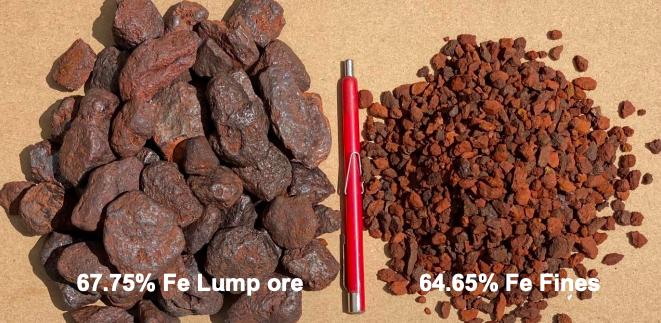
Different iron ores require different processing routes. Some high-grade hematite ores need only crushing and screening to produce lump and fines products. Lower-grade ores may require additional beneficiation. Magnetite usually needs fine grinding to liberate the valuable minerals from gangue before magnetic separation can produce a higher-grade concentrate.[Geoscience Australia, Iron][Jankovic, A., Comminution and Classification Technologies of Iron Ore, 2022]
For this reason, engineers should match the final crushing product size to the requirements of the grinding and beneficiation circuits.
Minjie Equipment Recommendation
Minjie provides mining crushing equipment and production-line solution information through its official website. For an iron ore project, buyers can evaluate a jaw crusher for primary crushing, then consider cone crushing, vibrating screens and belt conveyors to build a continuous crushing and screening circuit.
Contact us to explore its equipment and production-line solutions. When requesting a quotation, provide the ore type, maximum feed size, target capacity, required discharge size and ore hardness.
A properly designed Iron Ore Crushing Line helps mining operators process run-of-mine ore consistently, control particle size and prepare stable feed for downstream grinding and beneficiation.
Complete and submit the form to let us know your requirements. We will reply promptly.